How to care for the Yoyo loach (Botia almorhae)
Quick links - Answers
Advice by Mick, keeping fish since 1976

Brief Description
This page is an ultimate guide on raising Yoyo loaches with information about diet, behaviour and recommended tank set-up. Also visit this page (will open in new tab/window): YoYo loach - Botia almorhae which is a profile of Yoyo loach. In case your questions aren't answered below, use form at the bottom of this page and we'll answer! Sharing experiences and tips on raising these fish is welcome too.
Introduction
Botia Almorhae has several common names, yoyo loach, Pakistani loach, Almora loach and even its scientific name has changed recently from Botia Lochata to the above.
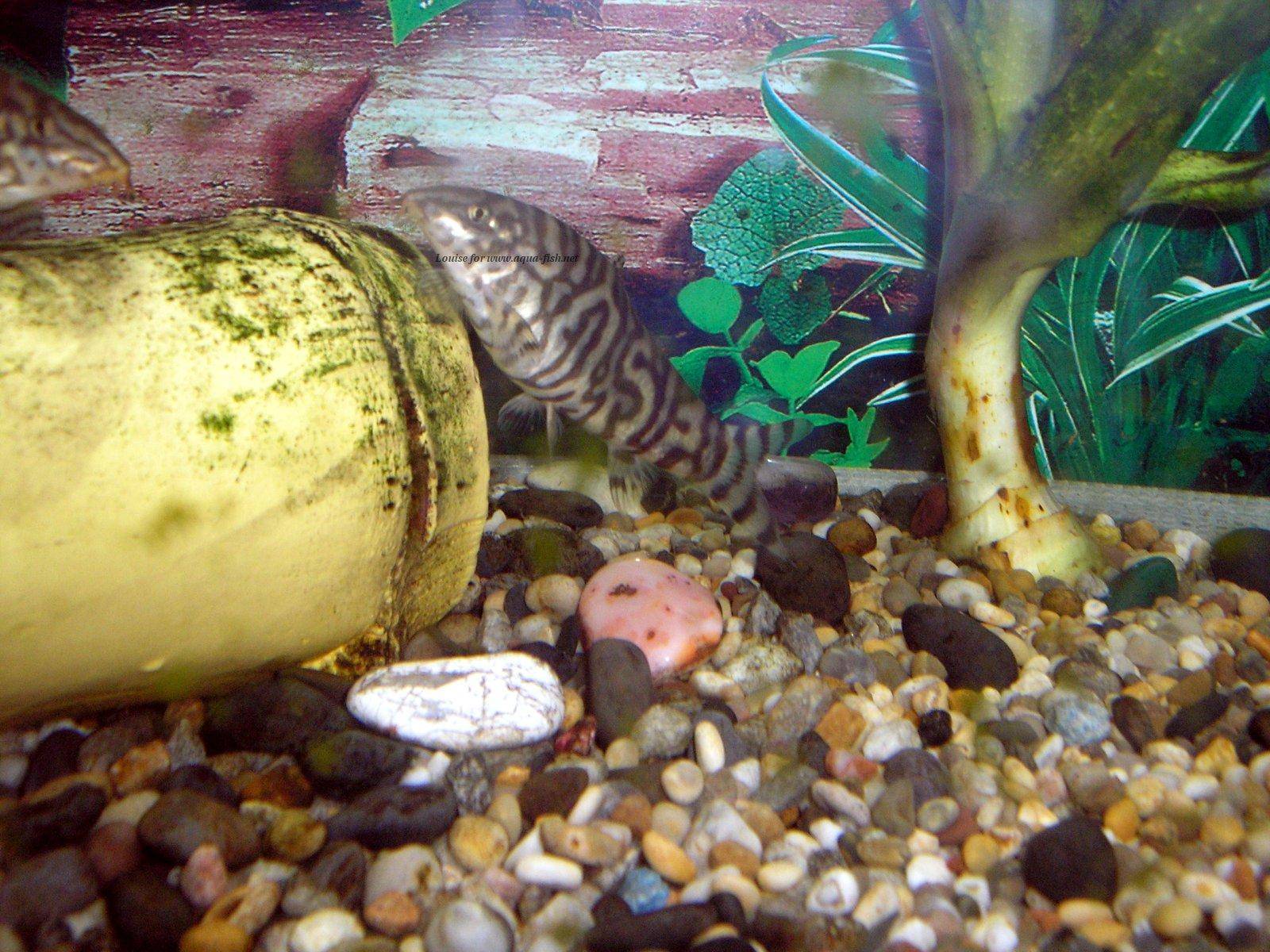
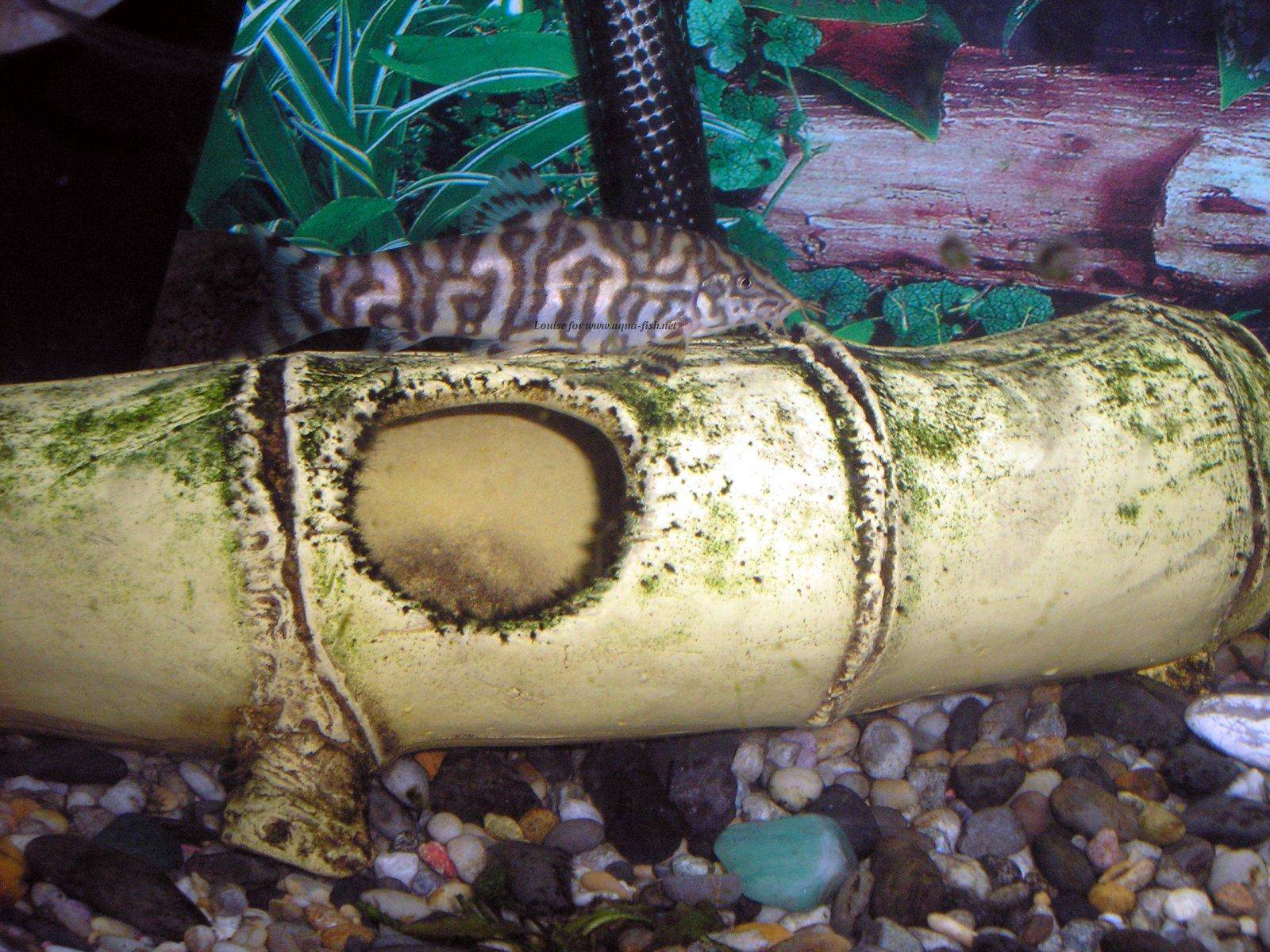
The common name yoyo loach is derived from the fact that on its body, with some individuals the markings actually spells out the word “yoyo”. This strange phenomenon never seems to occur with juvenile fish, the strange markings only develop with the fish maturing. This loach belongs to the family Cobitidae and is found in the slow moving waters of India and Pakistan. This is what gives it the other common name Pakistani loach. They can reach a size of up to 6 inches in the wild, but in captivity 4 inches is more often than not the maximum size.
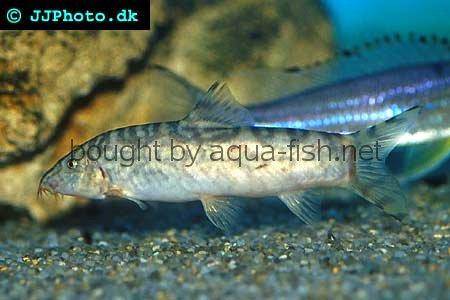
The yoyo loach is generally longer and slimmer than some of the other loaches that are part of this family but it still retains the overall shape of a typical loach with its curved back and straight belly. On the mouth there are four distinct pairs of barbells, a spine is also located just below the eye socket.
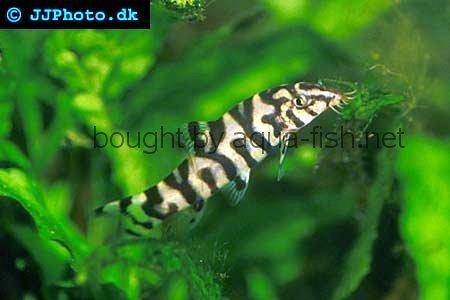
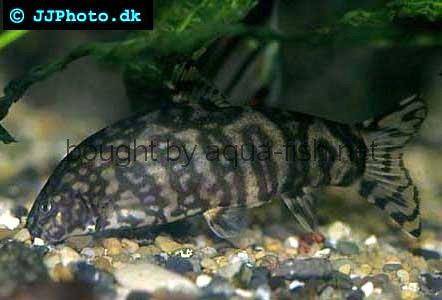
The main coloration of the body is either a grey or silver color, this is covered with vertical stripes along the back and sides, the stripes will vary in thickness on each individual fish. The striped markings also extend to the fins and dark spots are located in-between the stripes. This makes for a well camouflaged fish.
Sexing these fish is not easy, in fact the male and female are so similar it is almost impossible. It is believed that the female has a more rounded belly but there are no other obvious differences. There have never been any records of successful breeding attempts with this loach but in the future it may be possible as more and more species of fish are being bred in captivity.
Tank set up:-
The minimum tank size for yoyo loaches should be at least 3 foot for juvenile fish, as they mature and grow in size 4 foot - 6 foot is required to give them the swimming space that they need. Like all loaches, they are best kept in a small shoal of at least three fish, if only one or two are kept in the tank, they will not display their natural behavioral patterns. These are very active fish, even more active than there distant relative, the clown loach, hence the need for lots of swimming space. A soft substrate should be placed in the tank, sharp gravel or sharp sand will over a period of time, damage their delicate barbells. Hiding places should be provided, the smaller the better, they prefer to hide in tight areas rather than open caves. If you wish to add plants to the tanks remember these are loaches. They will not eat your plants but they can easily uproot most of them while they are scavenging for food. The best way around this is to introduce your plants first, let them get well rooted, and then add the fish afterwards. The yoyo can adapt to different water conditions, but the optimum temperature for these fish is 24 deg - 30 deg C (75deg to 86degF). The water should be soft to medium with a pH of 6.0 to 7.0. As they do originate from slow moving waters the water flow in the tank should not be too strong, but there are exceptions to that rule, some of the yoyo do prefer a stronger current than others. The only way to find out the best current is by trial and error. One of the main problems with the yoyo loach is that it can jump completely out of the water. They have been observed to leap out 6 inches above the water level, a tight fitting lid is a must.
Dietary needs:-
The yoyo loach will accept most foods offered to them, flake, pellets should be fed as part of the stable diet. Live or frozen foods should be given twice a week, brine shrimp or tubifex is ideal. Vegetable content is also important so zucchini or cucumber should also be offered to them.
Strange clicking noises are often heard when they are feeding from the surface, this is perfectly normal behavior from the fish. It is caused by the yoyo loach drawing in oxygen with the food and then expelling it from its gills, it can be quite a showpiece for any visitors to observe. If you are keeping snails in your tank then adding yoyo; loaches to it is not a good idea, they will devour as many snails as they can, if there are shrimps present they may persist in nudging them but will only eat the shrimp if it is sick or dying. They are not particularly fussy where in the tank that they obtain the food, they will feed from the top but also scavenge around the bottom looking for food.
Behavior patterns:-
When first introduced into the tank, they may hide for a few days and be very timid. Once they get used to the presence of humans, they will quickly associate humans with food and be at the front of the tank as soon as you enter the room. If their tank mates are non aggressive, they will spend a lot of time in the open, but if they are intimidated they may hide for prolonged periods. Having said that, if they are in the mood they can hold their own against most fish.
Keeping the yoyo loach in small shoals will produce the best from the fish, they will spend hours sifting through the sand looking for morsels to eat and will swim about in the group, dancing around each other.
If kept with slow moving fish they can be fin nippers but this is very rare, but they are very active being less nocturnal than other loaches, so if kept with timid fish, their playful antics can stress the other tank mates. Once settled in the aquarium, they will use every inch of space for investigating and scavenging, they truly are a delight to watch.
Pictures
Thanks to Louise! Other pictures were bought from jjphoto.dk.
Video
Feel free to download our video here (49 MB, 640x480, mpeg, MPEG-1 type).
 Advice on keeping Rainbow Sharks focusing on temperament and tank setup
 How to care for Bala Sharks with details on feeding, breeding and with forum
 How to keep and breed Barbus Tetrazona (The Tiger Barb)
 An article dedicated to raising Black Skirt Tetras in fish tanks
 Breeding Guppies by Kendra Jones
 An article on breeding and caring for Nothobranchius rachovii
 A guide on caring for Cherry barbs with discussions
 Species classified as community aquarium fish
 Article and forum on caring for Neon tetras including diet and breeding tips
 Fish species (how we divide fish)
 A forum and guide on raising Glass bloodfin tetras
 A guide on keeping Platies with FAQ and discussion
 A guide on caring for Guppies with focus on shapes and patterns
 The Guppy Fish - A guide and forum on breeding and care
 How to care for the Black Molly including breeding and discussion
 How to take care of Kuhli loaches with forum and images
 A guide and forum dedicated to keeping Guppies in aquariums
 An introduction to caring for Killifish
 Keeping Motoro stingray (Potamotrygon motoro) in home fish tanks
 Pictures of the Black Skirt Tetra with Discussion
 Proper Care of Rainbowfish with Feeding and Breeding
 A guide on keeping and breeding Mollies with forum and images