UV Clarifiers/Sterilizers - Aquariums and ponds use
What is a UVC?
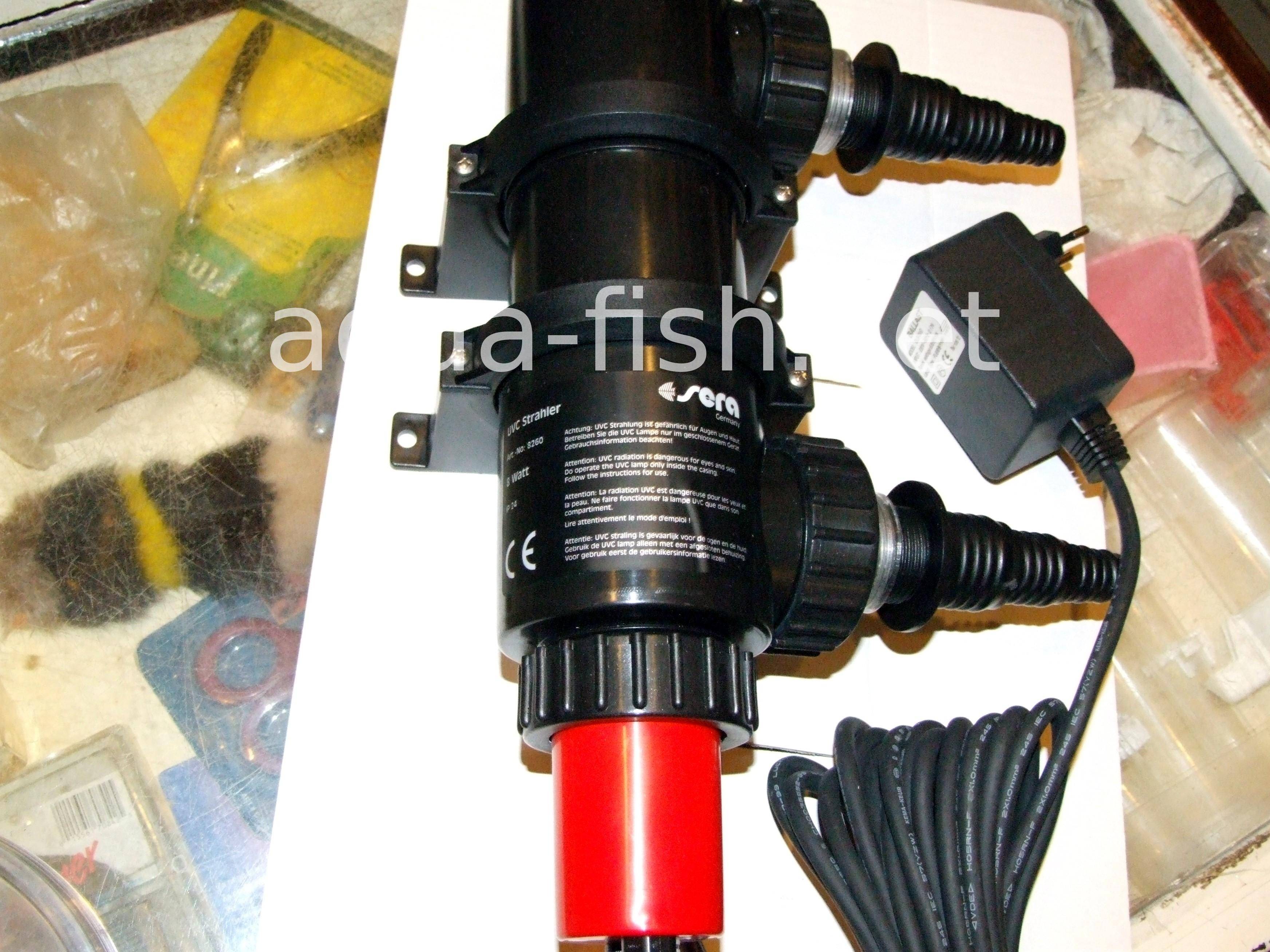
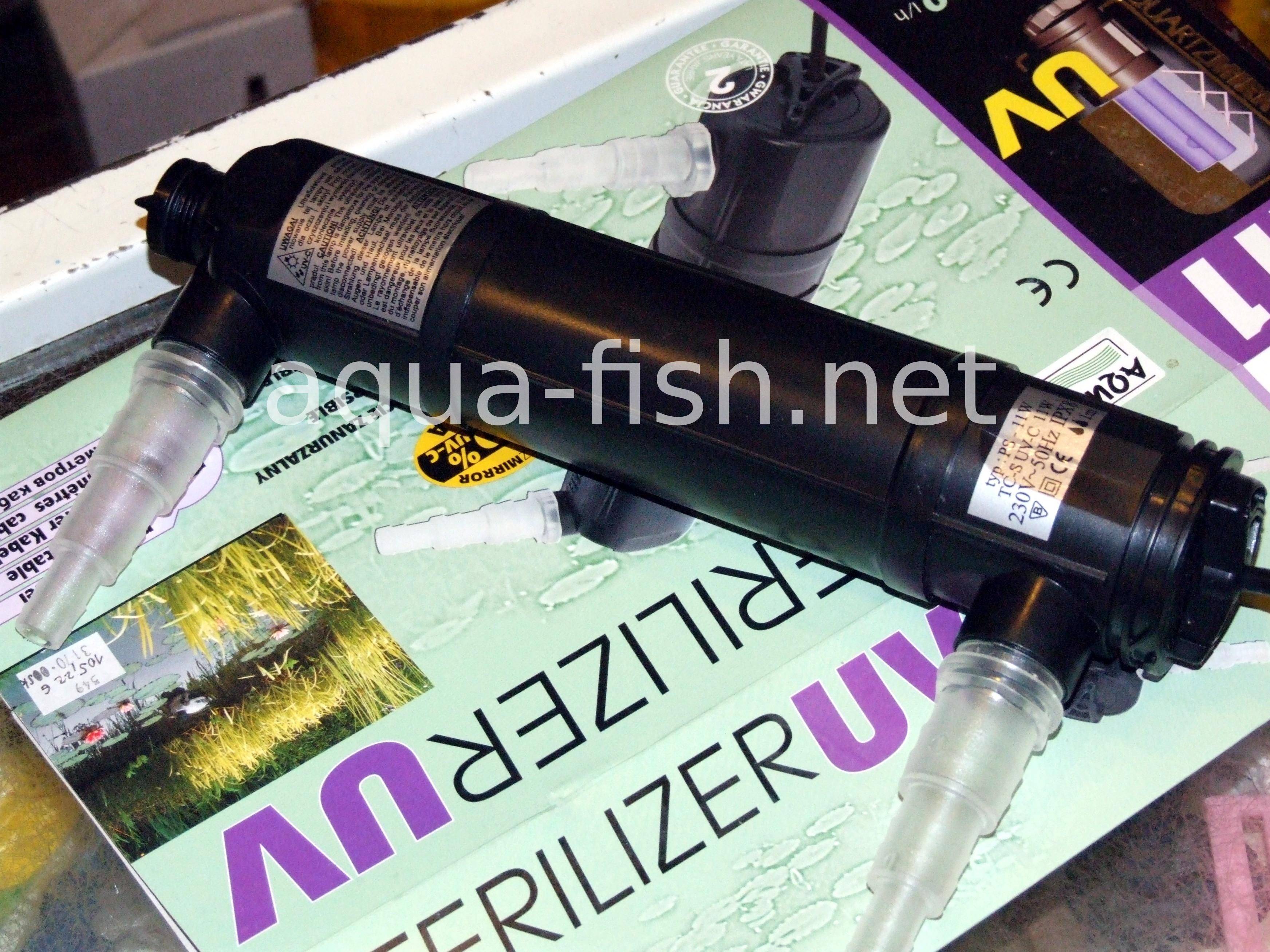
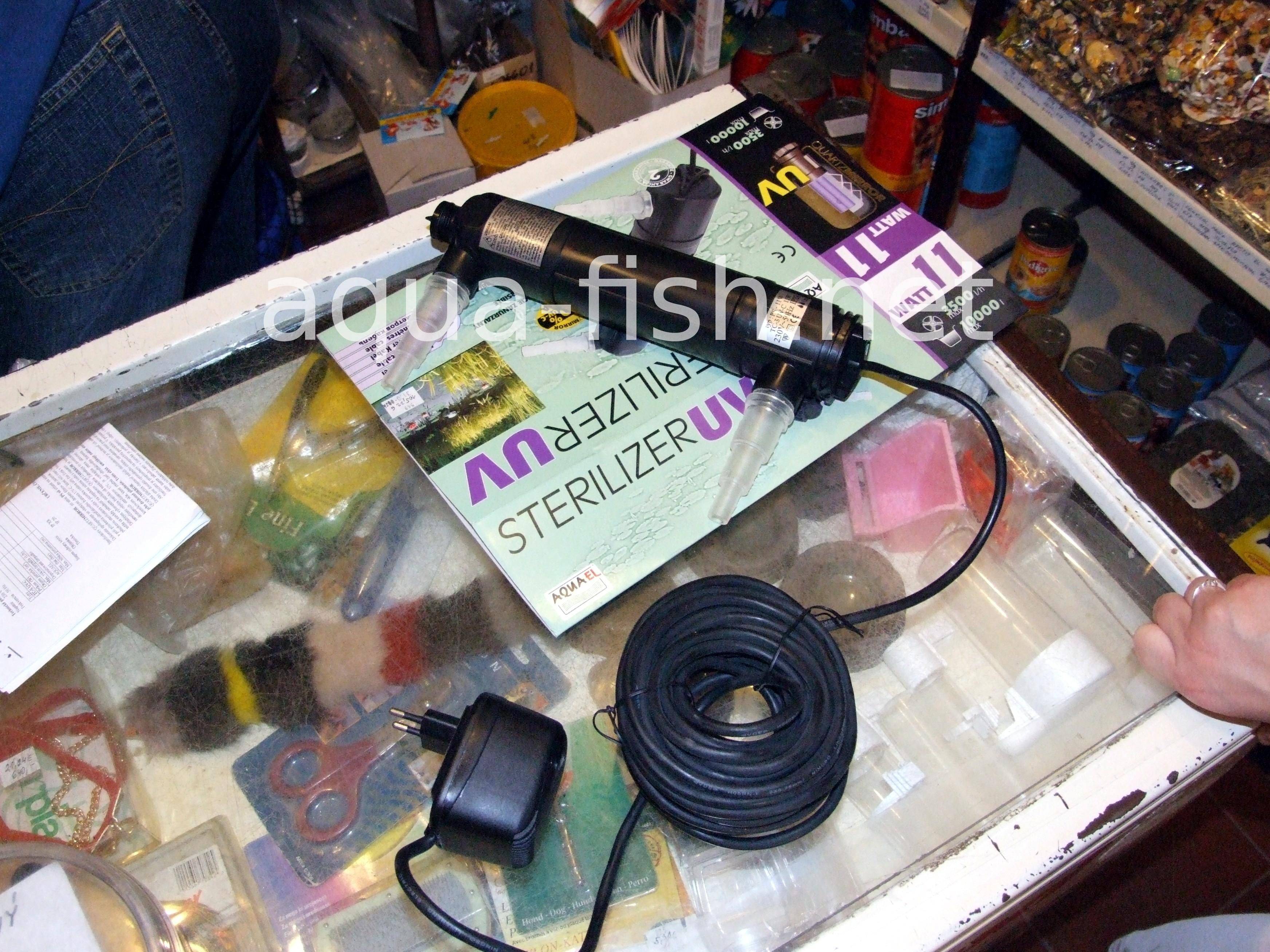
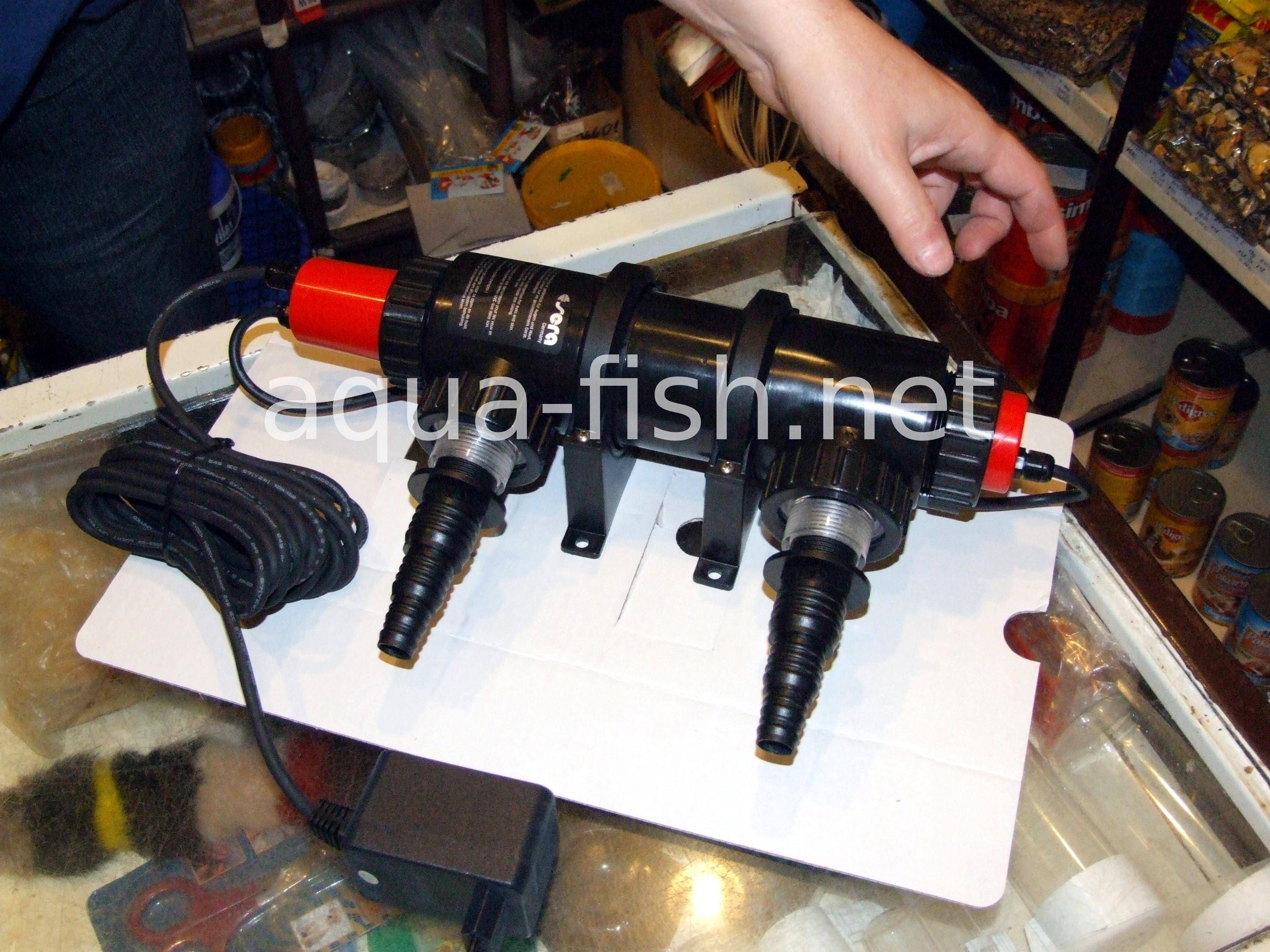
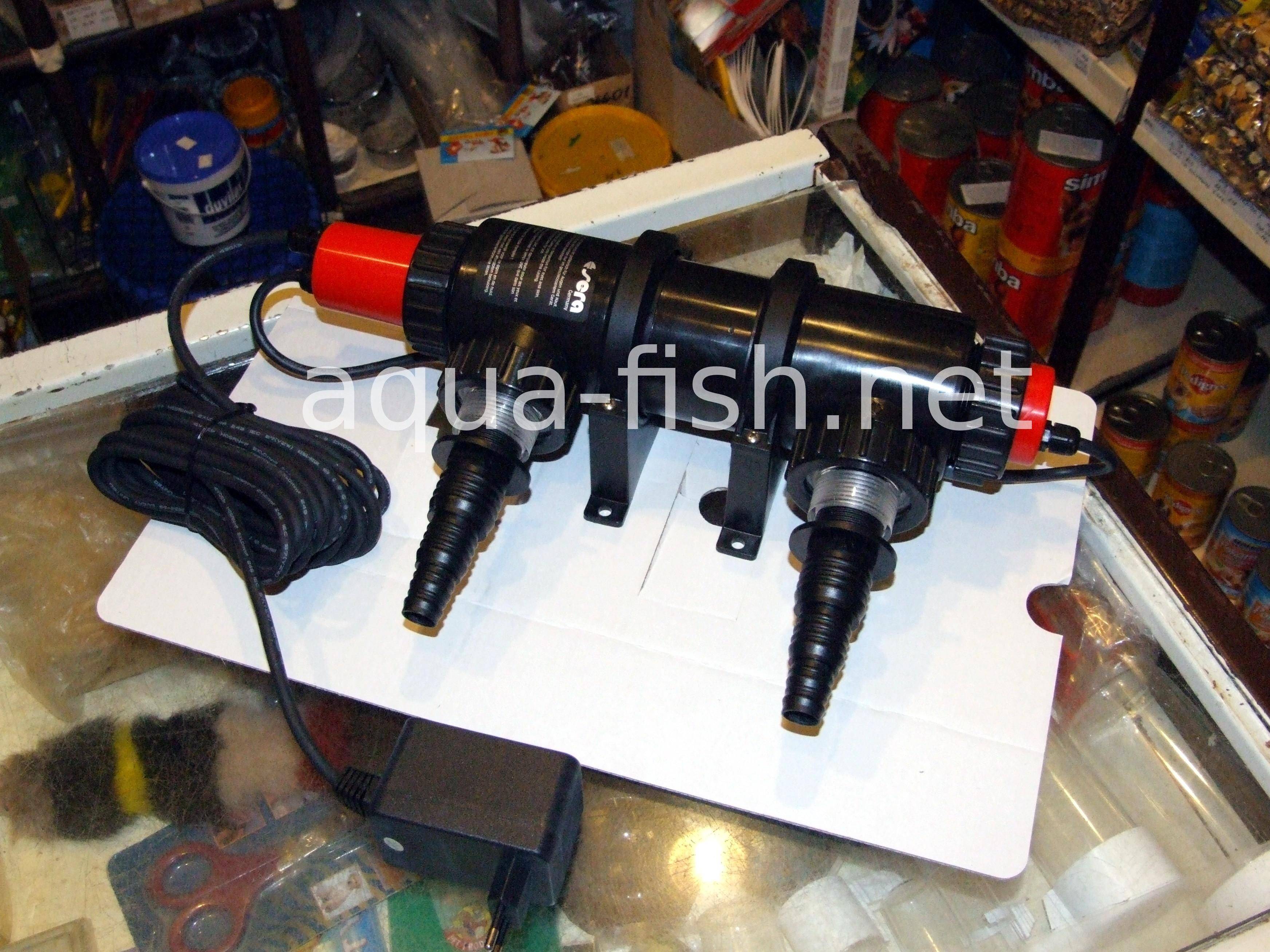
A UVC (Ultra-Violet Clarifier) is used for the purpose of removing water-bound Algae spores. This is primarily used for ponds where algae is most prevalent because of the still water conditions. It can also be used to clear algae from indoor fish tanks with great effect.
A UVS (Ultra-Violet Steriliser) is basically the same as above but is usually more powerful.
When do we need them? For pond owners, this next section is a “must read”, for aquarium owners, some of this information will be informative and may raise a few questions in your present methods!
Traditionally, ponds are naturally filtered by live plants and poorly maintained. When they are new, they look great, but after a year or so, they tend to get forgotten and allowed to stagnate and silt up. This is a shame, as well maintained ponds are a real pleasure as well as a small pocket of nature in your garden.
Do you have a pond? When was the last time you changed the water? Have you cleaned the bottom lately? Most people will answer “No” to these questions and probably ask why!
As with an aquarium, most garden ponds are closed environments and will require maintenance. You cannot rely on the rain to keep the water levels stable, and plants can only remove so much waste. Ponds have a tendency to be overstocked too. One of the side-effects of outdoor fish-keeping is that nature has a way of multiplying your stocks of fish. Each spring, adult Koi and Goldfish will breed and you won’t notice until the fry start to grow to a size that you can see clearly. Each adult pair is capable of producing very large sporns, and if there are no natural predators around, these will survive to adulthood quite easily. You may introduce just a dozen fish to your pond, but in a couple of seasons, these could be 2-300!
If the water conditions are poor, it will not stop the fish from breeding, but will hamper your ability to see what you have! Poor water conditions will lead to infections and premature deaths though. You wouldn’t dream of letting your aquarium go untended for months, so why treat your pond that way?
Anyone who has a pond in their garden is prone to algae. It can be unsightly and restrict vision into the water, hiding the fish from view. The risk of disease is actually greater in ponds than their indoor counterparts, as they are exposed to birds, mammals and insects not present indoors. These wild species can carry diseases and parasites to your pond. They are also prone to silting up. Smaller ponds will fill with leaf litter and plant debris very quickly, larger ponds are more able to cope and will break these down into mulch, but it will still build up over time and can become a problem.
The primary cause of algae is a build-up of nitrates in the water. This is one of the first signs of poor water quality, in the same way as it affects your indoor aquarium. Daylight is another major factor, and unlike your aquarium, you can’t easily control the amount of light that your pond gets. You can build it in a shaded area, which will help to reduce the amount of sunlight that the pond receives, but you can’t turn the lights off!
There are several things that can help, and they work well together. Firstly, movement of water will reduce the green water build-up. A simple fountain will cause currents in the water, helping to reduce green water, but will not stop it altogether. Regular water changes will help a great deal by reducing the nitrate levels, but if you have a large pond, that involves a lot of water! You need to do water changes regardless of other methods, but you can reduce the frequency and amount per change quite simply by fitting a filter! An external filter will be very beneficial and can be used to create an attractive water feature such as a waterfall as well. This helps in two main ways. It increases the aeration of the water and creates good circulation in the pond. Pond filters are not as expensive as you may think, and require minimal maintenance as long as you get one large enough for the volume of water in your pond. Most ponds of 100 gallons or more benefit from external filtration, but few have this luxury. To filter your pond can be difficult and will involve running mains power into the garden, but once done, the benefits are very noticeable.
But I haven’t got a pond! What about UVC for my fish tank?
Good question! Can you fit UVC to your fish tank? Yes, of course you can! However, similar rules apply to the installation, so read on…..
Always buy a bigger filter than the recommended capacity so that maintenance is reduced, there is better filtration and you can reduce the amount and frequency of water changes. Don’t forget that you will also need a pump to lift the water from the bottom of the pond to the filter continuously, to maintain the bacterial culture in the filter. If you need to turn the pump off at night because of the noise the water makes, change the feature so that it doesn’t cause annoyance at night! Most of the modern pond filters now have UVC built into them, but if you prefer, you can buy the two separately. The main advantage of choosing your own UVC is that you control the power and effectiveness better. The built-in ones are designed for a specific volume of water to suit the filter and the manufacturers expected use, whereas by buying your own UV, you can increase or decrease the effectiveness to suit your needs.
Most built-in UV clarifiers are exactly that. They are specifically designed to treat algae, not necessarily to treat the diseases that are water-bound too. This is not to say that they don’t, it all depends on the volume and throughput you demand. If you want sterilization as well as green algae control, buy bigger!
Can you have UVC without a filter? Yes, there is no reason why you can’t, but bear in mind that you still need a pump to force the water through the UVC! Something else to consider is that dirty water will impair the UV very quickly, with silt and debris building up inside the unit, blocking off the light from the tube, so position of the intake would be crucial, as would a pre-filter on the end. But in reality, if you are only suffering from green water, a UVC attached to the feed to a water feature would be just as effective. I have seen fountains with UVC fitted to them, but it does involve bringing the piping out to the bank where it can be attached to the UV unit, so you couldn’t use some of the small submersible fountains that are available today for this purpose.
Ok, now you wanted to know how you can fit them indoors, and why bother?
There are several very good arguments for UVC on the aquarium. They not only reduce algae, but are very effective at controlling disease too. One UVC on a 100 gallon tank will help to reduce the spread of diseases such as white spot, flukes, velvet and ich. UV kills the water-borne spores that spread the diseases through the water, so in conjunction with a good external canister filter, they become very beneficial. A small 15W UVC will sterilize 500 gallons of water per hour without harming the bacteria in the filter. It can be placed on the inlet or outlet of the filter so that the water is forced through under pressure. You cannot use UVC on a gravity fed supply, so if you are connecting to a gravity fed sump system, it must be on the pump side. The reason for this is that gravity feed will not expel all the air inside the unit or force the water uniformly past the tube. As yet, I have not found a UV unit suitable for use inside a tank and would not risk the chance of the fish being harmed by the UV radiation either, so to date, I don’t believe it possible to attach this type of system under water.
So, if you have a canister or sump filter, UVC is simple to attach. They can also be fitted to HOB filters, but this is a little more involved and will require some adaptation of the piping. The unit itself can be fitted anywhere out of the way, either next to the filter or anywhere along the piping. Most units are equipped with fitting plates to screw them down, so that the piping doesn’t take any of the weight of the unit, and it would be a sensible idea to fix the unit if at all possible.
My UV’s are supplied by Hoze-Lock, and have a removable foot-plate for securing to the floor, shelf or back of the stand. They also have directional connectors, so I can fit easily in almost any location. I have three units on my three sumps, each one suited to the volume of water in the system. I use the following guide when fitting a new UVC. Take the unit capacity and halve it, then you buy a very capable unit for the volume of water to control! Every UVC I have has twice the capacity I demand, so I am sure of obtaining the results I want!
Since installing the UV systems I have not needed to treat any of my racks for disease, and that includes the QT rack, (12 tanks totalling 500 gallons, filtered by a single sump), where new fish regularly bring in unwanted diseases. With UVC in-line, disease is no longer a problem in my QT, saving me hundreds of dollars in meds! (Just imagine the cost of treating 500 gallons for white-spot!)
Enjoy your hobby!
Feel free to visit Ultraviolet Sterilizers at firsttankguide.net too!
 Adding a fish pond to the garden landscape
 Advice and guide on fish ponds filtration with discussion and suppliers
 The purpose of a fish pond deicer and FAQ
 Ideas on building fish ponds along with images and discussion
 Fish Pond Aerators Purpose
 A comprehensive guide on using and choosing filters for a fish pond
 Fish Pond Pumps Use and Guide
 FAQ and answers about running a garden fish pond
 How to build a fish pond
 Importance of Pond Skimmers with Examples
  Maintainging a garden fish pond tasks
 Pond Deicer: Information
 The purpose of fish pond vacuums, reviews and forums
 The purpose of fish pond fountains
 Suppliers of fish pond liners with FAQ and forum
 Types of fish pond plants with the most common species
 Pond lighting - FAQ and types of lighting
 Why to Use Pond Test Kits
 What equipment to use for a fish pond