Barbus Tetrazona - Caring for, breeding, feeding, answers & forum about Tiger barbs
special thanks to halkor for allowing us to use the pictures
Quick links - Answers
Advice by Susan, keeping fish since 1996

Brief Description
This page explains how to take care of Tiger barb; From aquarium setup through feeding to breeding. We also have forum under the article; feel free to use it in case you cannot find answer on your question or simply if you'd like to share experiences, tips and ideas!
Introduction
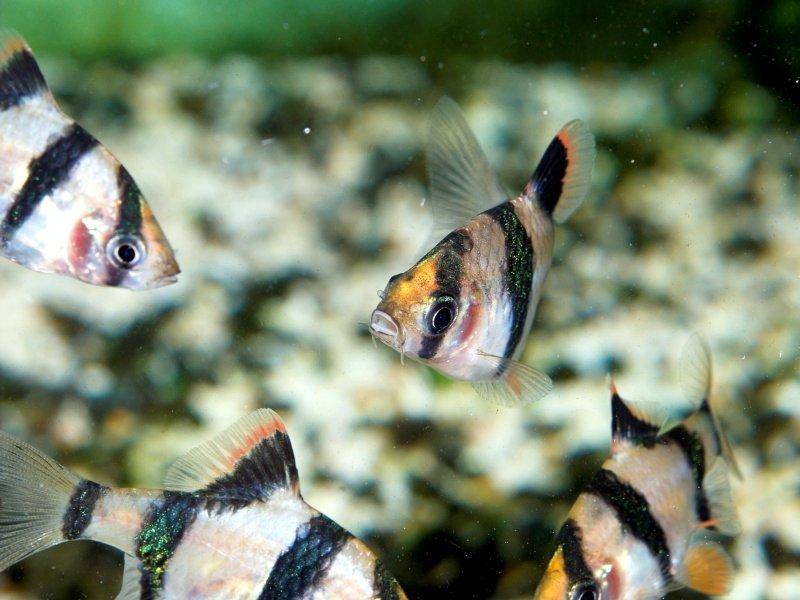
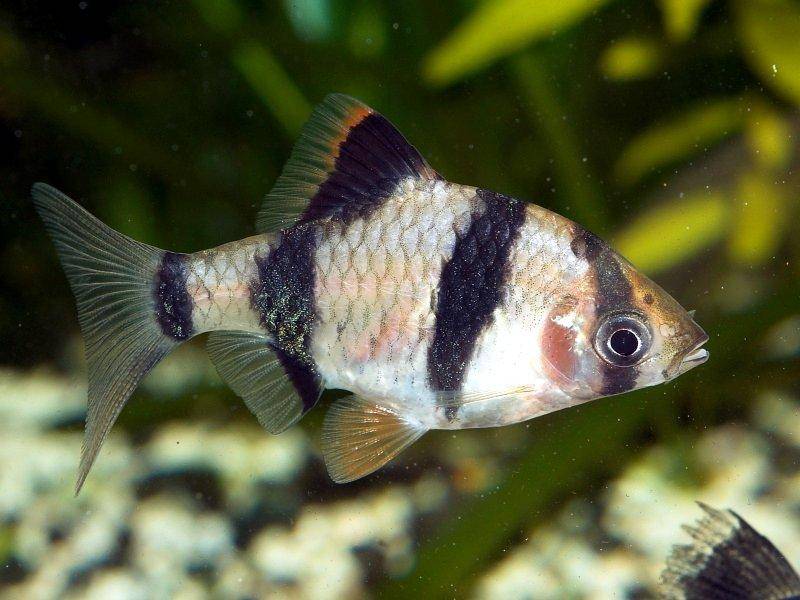
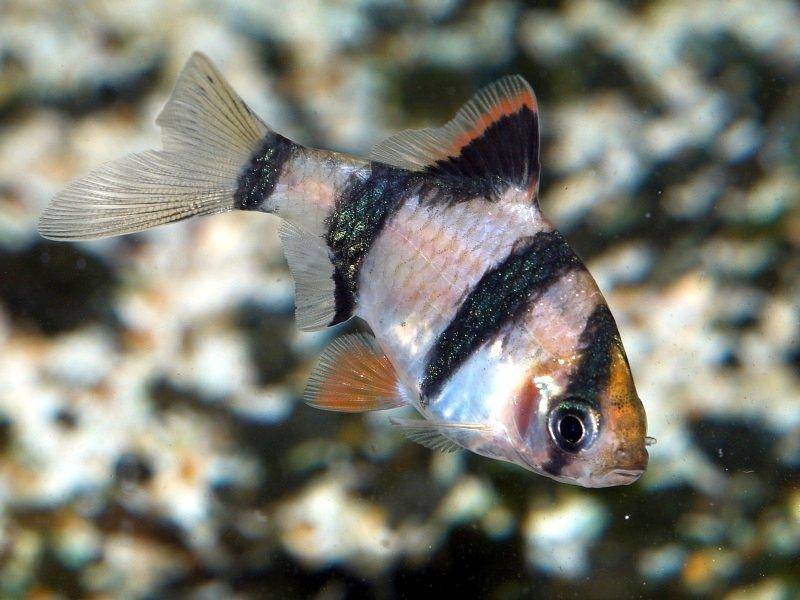
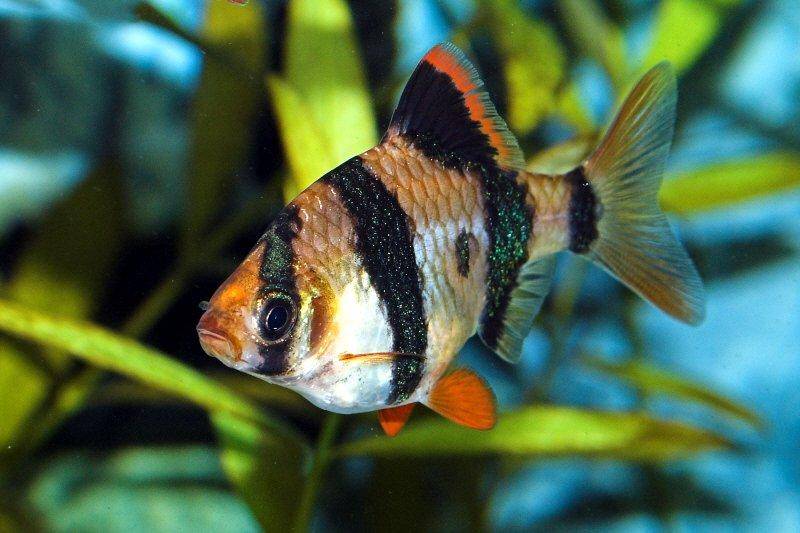
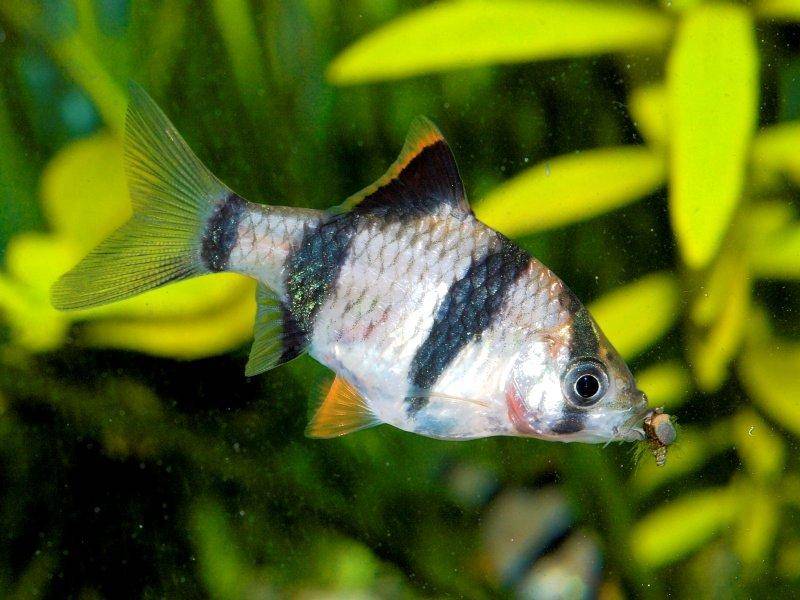
Barbus tetrazona is one of the most common barbus fish in aquariums. It comes from Sumatra and Borneo which is why you can find it also under the name of “Sumatra Barb”. Another common name of this fish is a “Tiger barb” due to its colour pattern, golden body with four vertical stripes, the first on the eye and the last at the begin of tail.
There are few differences between males and females, usually you are able to recognise them when they’re adults, and their size is near 2 inches (~ 5 cm). The male is slimmer than the female and has red fins, edges and mouth. Females are bigger than males and don’t have any red part.
Like other barbus, Tiger barbs live in shoals. The best number of fish in shoals is five or six. More fish could end up creating two shoals fighting towards each other; while a smaller number is dangerous because they could be aggressive towards weaker fish and won't group together in shoals.
After captive breeding one can find various colour mutations of this fish already available in pet stores.
- Green tiger barb has only a vertical black stripe on the eye, while the rest of the body has a dark green cover ending before the tail.
- Red tiger barb has a total red body.
- Coral red tiger barb is similar to the normal one, but the golden background colour tends to red.
- Golden tiger barb has a light yellow body colour with two white vertical stripes.
- Blushing golden tiger barb has a transparent golden body with red head.
- Albino tiger barb is mostly white.
Even if they belong to the same species, most of times Barbus tetrazona of different colour won’t join the same shoal. Therefore always choose fish of the same colour to create a group.
Aquarium
The Tiger barb’s behaviour is a bit nervous and aggressive within the shoal and also towards other fish, so it is better to house them in community tanks only if you have a bit of experience, otherwise a dedicated tank will suit their needs perfectly. They often fight to determinate the stronger one, and sometimes weaker and sick fish can be isolated. If you want a dedicated aquarium you can take at least an 18 gallons (~ 68 litres, 15 Imperial gallons) tank for 6 fish. In nature, they live both in lakes and rivers with clean water, so use a good filtration system. Since they usually swim a lot it is important to leave the central part of the aquarium almost free from plants and decorations. Barbus do not damage plants, and use to sleep among them; so put tall plants to the sides and on the background of the tank.
They don’t request specific water, anyway a light acid pH and a temperature range between 72°F and 82°F (22°C – 28°C) are preferred. Barbus usually don’t suffer from low temperature and some people leave them in an unheated tank, anyway this is a good solution only if your house is warm and temperature doesn’t go under 68°F (20°C).
As for the ground, gravel is the best material, dark or light colour depends on your Barb's colour: dark gravel for light Barbus and vice versa, just remember light gravel usually needs more cleaning.
Provide a good illumination for 10 to 12 hour a day, and don’t disturb them when light is switched off. Barbus tetrazona is one of few fish you are able to see when they are sleeping. They choose a part of the tank and hide and lean on plants leaves; their colours become lighter (it is easier to notice this change for a dark coloured barb's like green ones) and usually have a 45° position with head down and tail up.
In case you want to house barb's in a community tank be sure to have some experience with other fish. You have to control some parameters before housing a tiger barb shoal.
Here below, there is a list of fish and other things to avoid for a safe aquarium:
- small fish like rasbora, weaker one could end up eaten.
- to leave Barbus with other fish fry like young poecilia, because they will be eaten in a short time.
- long finned fish like male Betta splendens and male Poecilia reticulata (guppy), because barbs use to bite long fins of other fish.
- Caridina japonica and other small crayfish that could be eaten during their shedding.
- sick or old fish with swimming problems, could be bitten or eaten.
The best solution for barbs is a dedicated aquarium, in case you really want to add them in a community tank, prefer big fish like: big Anabantidae (i.e. Trichogaster), or other species like Epalzeorhynchus bicolor, Badis badis, and Balantiocheilus melanopterus; obviously these big fish request also big aquariums.
Tiger barbs do not request particular foods, and also flakes food is fine. Remember to feed Barbus when the light is switched on, they usually do not eat in the darkness. Leave food in different places so every fish will be able to eat undisturbed.
Breeding
Breeding Barbus isn’t really hard, but needs some time and work. Firstly, be sure to have a good number of males and females, generally a ratio of 1:2 (males:females) is good for breeding purposes. Once they reach the adult size you will be able to notice some fish divided to pairs. Take the pair and put it in a separated tank without any gravel, with water heater to have a temperature around 77°F (25°C) and a small filter. Feed them with live or frozen food, like brine shrimp, for a week. Then you should be able to see female’s belly getting bigger and rounder than before. Barbus spare eggs directly on the ground so be ready to take the parents off, before they start eating the eggs and fry. The fry can be fed with small live food like infusoria, and then brine shrimp.
The bigger problem with barbs breeding is to understand the right moment. Often they breed in the tank where there are other fish, this mean all the eggs and fry end eaten.
Moreover, it is difficult to determinate the sex between the red coloured barbs, and obviously different coloured specimens will not breed, because they find their partner among the shoal.
Copyright note: This article is originally written by Michela Ferretti. Aqua-fish.net owns the full copyright of this article.
Questions and answers
You're welcome to submit own questions about Tiger barbs, we'll answer them; Use a form that can be found at the bottom of this page for this purpose, please. Previously we were publishing some questions and answers at aqua-fish.net/answers, but merged them with related articles later in order to serve all information from one place.
Why do tiger barbs fight?
Answer: Tiger barbs are naturally an aggressive fish. If kept in a small shoal it will reduce the aggression to other fish and generally calm the tiger barbs down.
What fish can live with tiger barbs?
Answer: Tiger barbs do well when kept in shoals of 6 or more. If you keep at least 6 of these fish then you will be able to keep them with more peaceful fish such as danios and tetras. Because Tiger barbs can nip at fins it is a good idea to stick to tank mates that have short fins to reduce this behaviour.
Why do tiger barbs change colour?
Answer: Sometimes tiger barbs will colour up when they are agitated or being aggressive but the colors will then return to normal, as tiger barbs reach maturity they will sometimes become more colourful.
Which fish do tiger barbs attack?
Answer: Tiger barbs are a classic “fin-nipping fish”. They will nip at any fish that has long flowing fins. The best way to avoid this is to keep them in a small shoal of 10 fish so that they will spend more time with each other.
How do I sex Tiger Barbs?
Answer: As the fish mature the male will develop a red nose as well as a red line on his dorsal fin. The ventral fins will also turn completely red.
 Advice on keeping Rainbow Sharks focusing on temperament and tank setup
 How to care for Bala Sharks with details on feeding, breeding and with forum
 An article dedicated to raising Black Skirt Tetras in fish tanks
 Breeding Guppies by Kendra Jones
 An article on breeding and caring for Nothobranchius rachovii
 A guide on caring for Cherry barbs with discussions
 Species classified as community aquarium fish
 Article and forum on caring for Neon tetras including diet and breeding tips
 Fish species (how we divide fish)
 A forum and guide on raising Glass bloodfin tetras
 A guide on keeping Platies with FAQ and discussion
 A guide on caring for Guppies with focus on shapes and patterns
 The Guppy Fish - A guide and forum on breeding and care
 How to care for the Black Molly including breeding and discussion
 How to take care of Kuhli loaches with forum and images
 A guide and forum dedicated to keeping Guppies in aquariums
 An introduction to caring for Killifish
 Keeping Motoro stingray (Potamotrygon motoro) in home fish tanks
 Pictures of the Black Skirt Tetra with Discussion
 Proper Care of Rainbowfish with Feeding and Breeding
 A guide on keeping and breeding Mollies with forum and images
 An article and forum dedicated to caring for Yoyo loaches