Rainbowfish in Aquariums - Proper Care and Fish Profiles
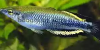
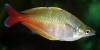
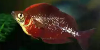
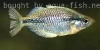
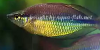
Brief description
This page is devoted to Rainbowfish and taking care of them in fish tanks; Including breeding and feeding. If you cannot find answer on your question here, use a form at the bottom to ask us! Sharing experiences is welcome too!
These fish were first discovered way back in the mid 1800’s, they are only to be found naturally in Australia, New Guinea, and the surrounding islands, where they inhabit the local rivers, streams and lakes. There are many, many varieties of this fish, but the families that they are classed as belonging to are Atherinidae, Telmatheriidae, Melanotaeniidae, and Pseudomugilidae. They have a good reputation for being peaceful fish, ideal for any community tank, but they are best kept in groups of at least six fish as they are schooling. All of the varieties are top swimmers and feeders so make an ideal choice to fill the top area of the aquarium.
They have been kept by aquarists since the start of the last century, so this alone has proven their popularity has stood the test of time. A lot of keepers never appreciate their true colors when they visit the pet stores, rainbow fish will not display fully until in the home aquarium, because of this a lot of potential buyers may miss out, not realizing what a wonderful addition they will make.
They are considered to be an easy species to keep, even for beginners, and in planted tanks, they will leave the plants alone; however as with any fish, the water quality must be maintained. Open swimming spaces must be provided as they will spend most of their time mid to top of the aquarium, swimming in a horizontal path, unlike other fish that tend to swim in a vertical path. A lot of keepers say that they will adapt to most water conditions but slightly softer water is ideal for them, temperature wise they should be kept anywhere from 20 – 24 deg C. pH is recommended to be around 6.0-7.0 but they will live in harder water although this is not ideal for them.
The surprising thing is that most rainbow fish can be kept in smaller aquariums, one of the most important factors is the surface area, due to their horizontal swimming pattern, and they will spend a lot of time at the surface. Part of this is because of their eating habits as well, they are classed as surface feeders.
The pygmy species of rainbow fish will live quite happily in a 10 gallon (40 liter) tank, up to 15 in fact will be o.k.
As you move to the larger species, a 20 gallon (80 liter) tank for 15 fish, the largest species will require a 40 gallon (180 liter) tank for 15 fish. Add plenty of live plants to the tank, they will feel a lot more secure if you provide hiding places, this should then make them color up to their true colors. If keeping the smaller species, it may be best to keep them in their own tank, away from the larger species, as they may struggle to compete for food etc.
In the wild the rainbow fish may experience a wide range of temperature fluctuations during the 24 hour period; they cope with this in their natural habitat, in the aquarium it is best to research the species you intend to keep to find the most suitable temperature range. As stated above, 20 – 24 deg C is only a guide, in fact one way to induce these fish to spawn is to raise the temperature by 2 or 3 degrees to trigger the process.
Good filtration is a must along with regular water changes (up to 50% weekly for heavily stocked tanks), these are a greedy fish but do not be tempted to over feed them, small regular meals are more beneficial than one large one. If any food is left in the aquarium uneaten, always try to remove it. It has been known for rainbow fish to jump from the tank, because of this open topped tanks are not an ideal choice, and a fitted lid is a much better option.
Feeding habits of Rainbow fish:-
To keep your rainbow fish in optimum health a good varied and well balanced diet is a must. Not only will this keep them in top condition, but it will also give then a good growth rate.
Rainbow fish are omnivorous; they will readily take animal and vegetable foods. The best way of feeding these fish is to try to re-create the food they would eat in the wild, this is not always practical, and so keepers will improvise with a variety of food available on the market.
Their natural diet comprises of quite a mixed bag namely insects, fresh water copepods or other crustaceans, insect larvae, worms, detritus, and smaller fish.
Most of these can be replicated with careful selection of nutritious foods in the form of flakes and granules. These fish are surface feeders so the food supplied needs to be able to linger at the top of the water column to allow them to consume it. Any food sinking will be mostly ignored, unless some bottom feeders are added to the tank. Live and frozen foods need to be fed on a regular basis as well, mosquito larvae, bloodworms, and white worms are ideal. If using frozen foods allow them to defrost at room temperature first before you offer them as food, once defrosted feed immediately as they will soon lose their nutrients if left too long.
Freeze dried foods can also be fed, once re-hydrated they will hold all of the nutrients that are required.
I have always been a big fan of creating my own mixture of food for the fish I keep, basically all that is required is to mix everything in & bind it all with gelatin. Then freeze the mix in sheets, this way you can break off as much as you need for defrosting. I have already mentioned that rainbow fish are greedy fish, but it is well worth remembering that over feeding them will not do them any favors.
Live food is also a good addition to the diet if added once or twice a week; in the wild there time is spent constantly looking for food, so this would be a well appreciated treat for them.
Breeding rainbow fish:-
Sexing your rainbow fish is quite a straight forward process, the males tend to have much more colorful bodies, plus their dorsal and anal fins are more extended and flowing. Some of the species are more difficult to sex than others, but the dorsal fin on the male is always longer than in the female. Obviously to have any success with your breeding program you will need at least one male and one female, however research the species that you have, some of the species prefer to be kept in a pair only, other species will spawn in groups. In this case always make sure that the females outnumber the males, if not one female could be harassed for mating, this will then induce stress.
The size of the breeding aquarium only needs to be about 10-15 gallons (40-50 liters), the substrate required is just a thin layer of gravel. Spawning mops or plenty of moss needs to be added, this should be weighted down as in the natural habitat the fish will lay their eggs just above the substrate. Keep the tank well aerated and perform several small water changes through the day if no filtration is added. Two weeks before attempting to breed, feed up the fish with live and high protein food, this will increase the number of eggs that will be laid. The spawning normally occurs in the morning, 24 – 48 hours after the fish have been introduced, the ritual will start with the male swimming backwards and forwards in front of his favored spot. The male will display his dorsal fins and sometimes may color up on his forehead with a vivid stripe. When the female is ready she will go to the spawning site, the male will be nudging her, and both fish will then tremble at the same time.
When the eggs are ready to be scattered, both fish will line up, side by side and continue trembling. The eggs will be scattered on the spawning medium, they are sticky and will attach to the mops by a fine thread. Some eggs will probably be lost; any eggs that the parents see will probably be eaten.
The best way to achieve the maximum number of fry is to remove the mops or moss to a floating chamber (normally a 2 liter plastic container), and let this float on the water surface. Add an air stone to provide water flow to all of the eggs, do not all direct light to enter the container as this can affect the embryos. Any unfertilized or infected eggs should be removed with a syringe or an old eye dropper.
Hatching times vary with the different species, some will hatch in a week, others may take a few weeks, yet again research the fish so that you know what to expect. When hatched the fry will be approx. 4 mm long, they will stay at the bottom of the container for the first couple of days, and after that they will rise to the surface.
There is no need to feed the fry for the first 2 days, they will survive on their yolk sacs, once this is depleted, and then the serious business of getting them to eat begins. The fry will need moving to a rearing tank when they are ready for food, releasing them back into the breeding tank will only encourage the parents to eat them.
All that should be placed in the rearing tank is a sponge filter, any substrate or décor will only hamper your attempts at keeping the tank free from any sources of contamination. The sponge filter should be rinsed on a regular basis to keep it clean and free from blockage, it should be regulated with a slow air flow to prevent excessive water flow around the tank. The temperature should be set to between 24-28 deg C.
The water should be changed every couple of days, small changes are best, siphon out the old water carefully, and making sure no fry are sucked out. Keep checking the fry for deformities, if there are any they should be removed as soon as possible. Any uneaten food and fish waste should be siphoned out constantly to ensure that there is no chance of water contamination.
The fry should be fed several times per day; obviously their stomachs are minute, so small regular meals are more beneficial. Variation in the diet is a must for the fry if they are to survive to maturity, infusoria and freshwater rotifers are ideal, as are newly hatched brine shrimp.
Infusoria is prepared quite simply by filling a clear container with clean water, then add a potato peeling, leave it for a few days to allow the water to go cloudy. The cloudiness is caused by the infusoria populating the container.
As with all fish fry, mortality rates can be high; this can be reduced by constant cleaning of the tank and sticking to the small regular meals. As the fry feed, their stomachs should swell, if this is not happening, then try different, smaller foods with them. After a week or two the fry will now be ready for larger foods such as micro worms or vinegar worms. Continue adding the original diet as the smaller fry may not have developed enough for the larger diet, and the middle sized fry will still enjoy eating the original plus the new diet. Size separating is a good idea as this will allow the smaller fry to obtain their food supplement without having to compete with the larger fry; this should then allow them to catch up in the growing on stage.
After 10-12 weeks the fry are now big enough to be placed into a community tank, firstly they will need to be weaned onto the general flake foods that the tank will be given.
If rainbow fish are kept in optimum aquarium conditions, they will be a great addition to your tanks. Like all species of fish they can become victims of diseases and viruses even though they are classed as quite a hardy breed.
Species
- Bedotia geayi (Madagascar rainbowfish)
- Bedotia madagascariensis (Rainbowfish)
- Chilatherina bleheri (Bleher’s rainbowfish)
- Glossolepis dorityi (Dority’s rainbowfish)
- Glossolepis incisus (Red rainbowfish)
- Glossolepis wanamensis (Wanam rainbowfish)
- Iriatherina werneri (Threadfin rainbowfish)
- Marosatherina ladigesi (Celebes rainbowfish)
- Melanotaenia affinis (New Guinea rainbowfish)
- and more here
 Advice on keeping Rainbow Sharks focusing on temperament and tank setup
 How to care for Bala Sharks with details on feeding, breeding and with forum
 How to keep and breed Barbus Tetrazona (The Tiger Barb)
 An article dedicated to raising Black Skirt Tetras in fish tanks
 Breeding Guppies by Kendra Jones
 An article on breeding and caring for Nothobranchius rachovii
 A guide on caring for Cherry barbs with discussions
 Species classified as community aquarium fish
 Article and forum on caring for Neon tetras including diet and breeding tips
 Fish species (how we divide fish)
 A forum and guide on raising Glass bloodfin tetras
 A guide on keeping Platies with FAQ and discussion
 A guide on caring for Guppies with focus on shapes and patterns
 The Guppy Fish - A guide and forum on breeding and care
 How to care for the Black Molly including breeding and discussion
 How to take care of Kuhli loaches with forum and images
 A guide and forum dedicated to keeping Guppies in aquariums
 An introduction to caring for Killifish
 Keeping Motoro stingray (Potamotrygon motoro) in home fish tanks
 Pictures of the Black Skirt Tetra with Discussion
 A guide on keeping and breeding Mollies with forum and images
 An article and forum dedicated to caring for Yoyo loaches