Pearl Gourami (Trichogaster leeri) – Care, Diet, Breeding, and Aquarium Setup
Quick Links – Topics Covered
Advice by Jan, keeping fish since 1995

Brief Description
This article offers comprehensive information on caring for Pearl Gouramis, including their ideal tank setup, diet, and breeding requirements. If you have questions not covered here, please use the form at the bottom of the page to ask. We are happy to help!
Introduction
The Pearl Gourami, also known as Leeri Gourami, Lace Gourami, Diamond Gourami, Platinum Gourami, and Mosaic Gourami, is a vibrant fish species. Despite their various names, they all refer to Trichogaster leeri. Renowned for their vivid colors and resilience, Pearl Gouramis are perfect for beginner fishkeepers.
Generally peaceful community fish, Pearl Gouramis can become territorial if multiple males are kept together, especially during breeding periods. Native to regions such as Asia, Thailand, and Indonesia, they typically have a lifespan of about 5 years in captivity, though some can live up to 8 years.
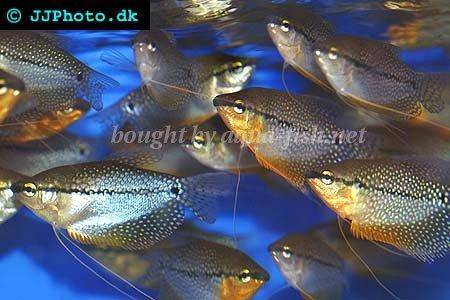
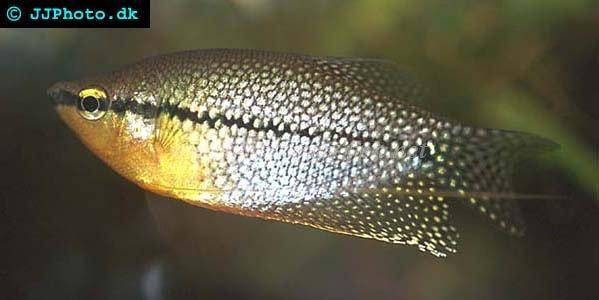
Pearl Gouramis are not fussy eaters and will accept flake foods, granules, and various other offerings. Their coloration features brownish-silver hues with a striking lace-like pattern across their body, complemented by a black stripe running along their sides and ending in a dark spot near the tail. In their natural habitat, they inhabit slightly acidic, vegetated swamps but can adapt to harder water in home aquariums. As labyrinth fish, they benefit from a tank with a large surface area. They usually occupy the middle to upper parts of the tank and, with their slightly upturned mouths, prefer surface feeding. Males are more colorful, displaying an orange throat and belly, especially when ready to breed. While they can be kept singly, their colors are most vibrant in pairs.
Tank Setup
In their natural environment, Pearl Gouramis thrive in densely vegetated areas. Recreating these conditions in your aquarium will greatly benefit their health. For a pair, a tank of at least 12 UK gallons (approximately 55 liters) is recommended, although a larger tank offers more swimming space. As mid-to-top dwellers, Pearl Gouramis do well with either sand or gravel, with darker substrates enhancing their vibrant colors.
Add plenty of plants to the tank, whether real or artificial, to provide cover. Pearl Gouramis prefer subdued lighting, so reduce the brightness and include floating plants. These plants assist with breeding, as Gouramis build bubble nests. Ensure the fish can easily reach the surface for air, as labyrinth fish need to breathe occasionally. Maintain a water temperature between 22-28°C (72-82°F) and a pH level of 6.5-8.0.
Regular tank maintenance is crucial. An efficient filtration system and routine water changes will prevent disease and ensure a clean environment for your fish.
Dietary Needs
Pearl Gouramis are versatile eaters, accepting a variety of flake and pellet foods. To ensure a balanced diet, offer live or frozen foods such as bloodworms or brine shrimp two to three times per week. With patience, they may even start feeding from your hand.
Breeding Your Pearl Gourami
Pearl Gouramis are an excellent choice for beginners interested in breeding egg-laying fish. They are easy to sex, and once they start breeding, they take good care of their fry. For breeding, use a minimum of a 10-gallon (approximately 45-liter) tank. Avoid using a substrate to maintain cleanliness, and use a sponge filter for water flow and filtration. Gouramis build bubble nests, so provide a surface like a floating polystyrene sheet for nest construction. To secure the sheet, make a hole, thread some string through it, and attach it to the side of the tank. Condition the breeding pair with live or frozen foods for about a week. After conditioning, the male's belly should turn a bright orange, while the female will appear swollen with eggs. Turn off the sponge filter to prevent disturbance during nest building.
The male will gulp air from the surface and release bubbles beneath the polystyrene sheet to form the nest. Once completed, he will guide the female underneath. During spawning, he wraps around the female, squeezing her to release eggs for fertilization. This process is repeated, with the male collecting and placing eggs into the nest.
After spawning, the male will chase the female away from the nest. Remove the female to prevent her from being harassed. The male will stay with the eggs, gathering any that fall, for up to a week. He will not eat during this time, so avoid adding food to the tank to prevent water contamination.
Once the eggs hatch, the fry will start swimming away from the nest. As they become more active, remove the male from the tank. The fry will take about a week to absorb their yolk sacs, after which they can be fed liquid fry food. Two weeks post-hatching, introduce newly hatched brine shrimp. As they grow, they will accept crushed flake food. Remove any uneaten food to maintain water quality.
Perform daily water changes and keep the sponge filter off until the fry are strong enough to swim against the current, usually after three weeks.
While breeding methods may vary among breeders, this approach has proven effective.
Pictures


 Comprehensive Guide to Keeping and Breeding Kissing Fish (Helostoma temmincki)
 Comprehensive Guide to Blue Gourami Care, Breeding, and Aquarium Setup
 Comprehensive Guide to Breeding and Caring for Dwarf Gouramis
 Comprehensive Guide to Dwarf Gourami (Colisa lalia) Care and Breeding
 Caring for Gourami Fish: Complete Guide to Popular Species and Breeding Tips