Mollies - Care, Species and Forum
Different species of Mollies


Quick links - Answers
Advice by Susan, keeping fish since 1996

Brief Description
This article covers all aspects of keeping Mollies in fish tanks; From origin through sexing, breeding to different species. In case you can't find answer on your question below simply use a form at the bottom - no matter whether you're asking questions or sharing experiences, you're welcome!
Introduction
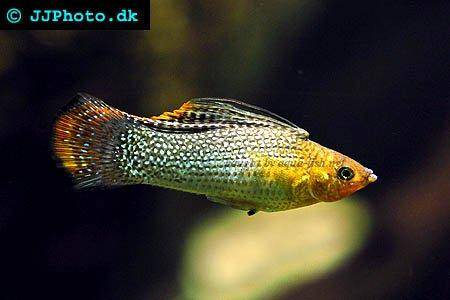
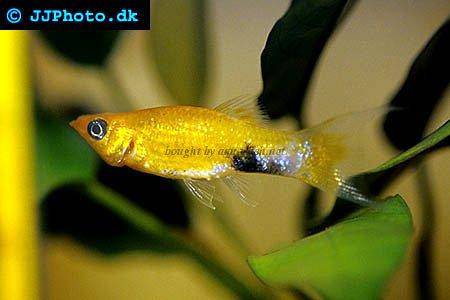
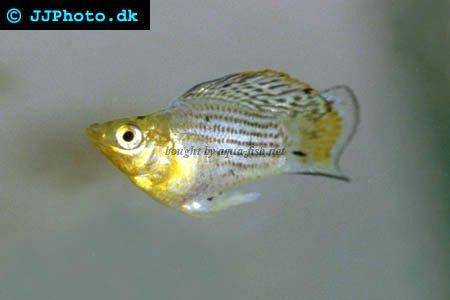
Mollies are interesting and popular fish from the family Poeciliidae. They are freshwater livebearers; which mean they give birth to live young, much like guppies, platies and swordtails. There are several varieties of molly, some of which are readily available to the aquarium industry. Their colours and fin variations make them a highly desirable species for keeping. They are hearty and easy to breed which make them a great pet for novice aquarists.
All molly fish are named under the genus Poecilia in reference to their colouration. Each of the molly species has a name that represents what make them different from the other molly species. Some of them are: Poecilia sphenops which means wedge-like appearance, Poecilia velifera refers to its sail bearing dorsal fins, and Poecilia latipinna describes this molly’s broad dorsal fin.
Origin
Molly fish are brackish or fresh water species that are native to waters along coastal salt, brackish and freshwater regions of North Mexico, Guatemala and Honduras. Populations of several molly species were transported to New Zealand, Western United State and Hawaii to control the mosquito population. This was possible because of the molly’s ability to adapt to different water conditions.
Conditions in the tank
Mollies are well known in the aquarium industry as being one of the easiest types of fish to take care of. They are not very picky about their water conditions, types of foods, or breeding habits. Amateur aquarists often start off by raising mollies when they are getting to know the aquarium keeping hobby. These fish are attractive, colourful fish that are inexpensive and nonviolent. They tend to get along very well with most other peaceful fish. Though not all that particular, their optimum water temperature is anywhere between 68 - 82ºF (20 - 28°C) with a pH of neutral to slightly alkaline. Mollies are slightly hyperactive so they are best kept in a tank of 30 gallons (114 litres, 25 Imperial gallons) or more to provide plenty of free swimming space where they prefer to live in groups of 7 or more. There should be plenty of plants available for the fry to hide among until they are too big to be looked at as food. Mollies have developed the upward turned mouth which indicates they are in fact surface feeders. They will eat any and all prepared foods that are small enough to fit in their mouth but they should get some extra veggies for better health.
Sexing
Sexing is very easy for all the Poecilia species. The males have a modified anal fin known as a gonopodium which is used to inseminate the female while mating. The males have elaborate colour and fin displays with which he can either impress a potential mate or intimidate other males.
Breeding
The male has to mate with the female just one time in order for her to be able to produce several broods. Most female livebearers are able to store sperm in her body until she is ready to get pregnant. This can happen multiple times over the course of her lifetime. You can tell a female molly is pregnant when you see a gravid spot or dark spot on her plump belly near her anus. A female will produce approximately 60 fry per brood and can become pregnant again within a matter of weeks. It is best to separate a pregnant female so that the male cannot eat their young.
Caring for the young
Members of the molly family do not have good parenting skills. Once the brood is born the mother will go about her daily business of grazing and swimming as if nothing unusual has even happened. A densely planted birthing tank is required for the well being of the young fry. They are born ready to fend for themselves but not big enough to defend themselves. They need an area to seek refuge and safety which is where the plants come into play. Feed the babies a quality diet of newly hatched brine shrimp and microworms. Try to incorporate veggies into their eating routine for a well balanced diet. Because they are so small they should eat small portions 3-4 times each day. Be sure to perform partial water changes every other day to keep the water fresh and clean.
Selective breeding
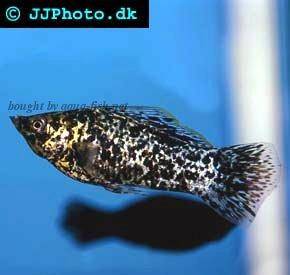
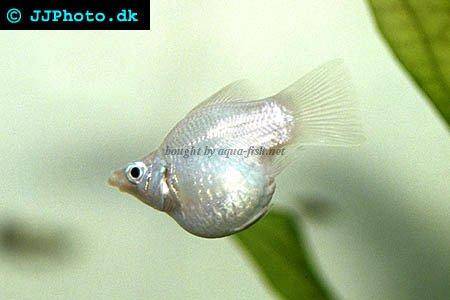
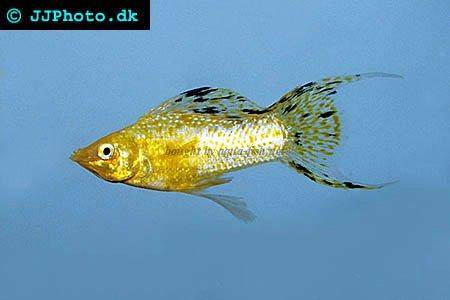
Special colours and elaborate fins are not traits that mollies possess without the selective breeding process. The finest specimens are taken and bred to create and sustain all of the best traits admired in the aquarium industry. Many different phenotypes are combined to produce sail fins and lyre tails, colours of black, albino and marble, as well as balloon shaped bodies. Selective breeding is done by separating high quality virgin females and exposing them to males with superior traits. To prevent unwanted mutations and deformities, breeders are careful to not combine any fish that are related to one another.
Different Poecilia species:
-
Poecilia velifera
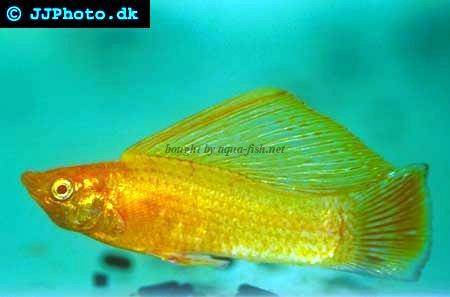
Is also known as the Yucatan molly because that is where they are found. It is hard to tell the difference between the sailfin molly and the Yucatan molly because they both have the sail-like dorsal fins and grow to roughly the same size of 2.5 inches (6.35 cm) in captivity. When in the wild the Yucatan molly grows larger than 4 inches.
-
Poecilia latipinna
Is commonly known as the sailfin molly. As stated in its name, this molly has a fin like a sail which is a highly prized trait in the aquarium industry.
-
Poecilia sphenops
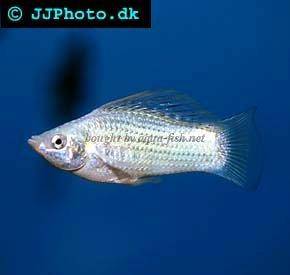
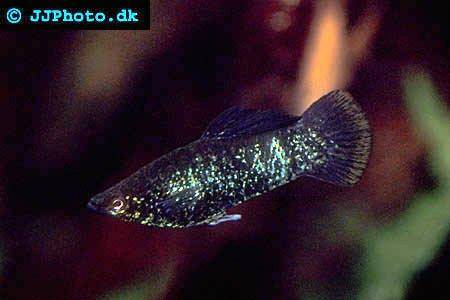
Is the dull silvery coloured wild type molly. This common molly species can mate with the different molly species to produce the hybrids found in aquatic retail stores. The black molly is one of the strains produced from breeding P. sphenops with other molly species.
-
Poecilia formosa
Is a hybridized version of the sailfin and pacific Mexican species. This Amazon River Molly from South America is the first unisexual vertebrate to be discovered who reproduces through gynogenesis. This means the female of this particular species does not need male fertilization in order to reproduce. In fact, the males of this species almost do not exist. For every 10,000 females produced there is one sterile male Amazon River Molly. Even if there were more males available they are born unable to reproduce, so without the females’ amazing ability to self fertilize, this species will have long since ceased to exist. To make the situation even more interesting, the females are not completely independent in reproduction. In order to reach full sexual maturity and to be able trigger ovulation, the female Amazon River Mollies need to mate at least once with a male. Males from similar molly species are used to mate with just once. The sperm collected from mating has no part in fertilizing the eggs. The mother’s eggs already contain the genetic information to complete the process of making new young. Instead of getting half of their genes from the mother and the other half from the father, the Amazon River Molly babies get their complete DNA from the mother. They are basically clones.
-
Poecilia butleri
Is also known as the Pacific Mexican Molly. This species grows to a maximum of 4 inches (10.16 cm) and can be somewhat aggressive in comparison to the rest of the molly species. These grey or black mollies with orange markings come from Central American brackish waters from North America to Guatemala and Honduras.
-
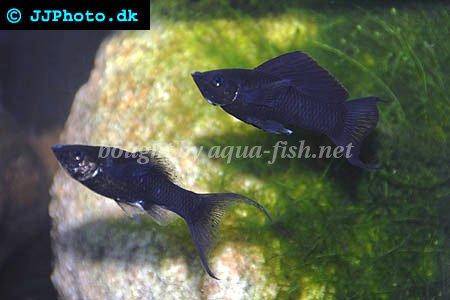
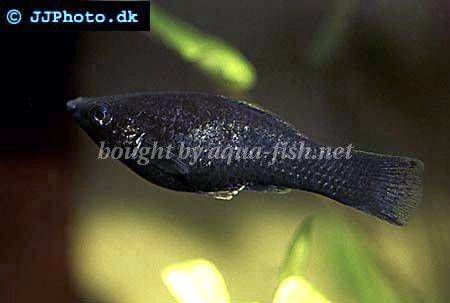
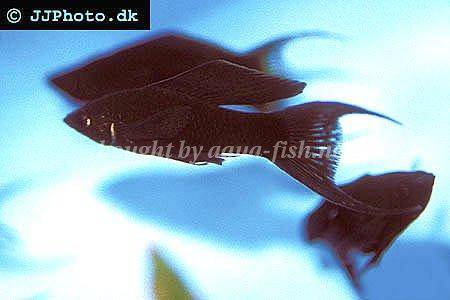
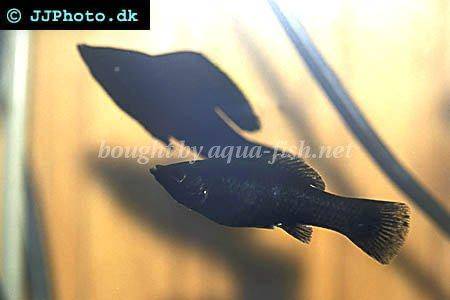
Black Mollies
Are reputed to lack strong immune systems. Along with the mutations that come along with the selective breeding process comes the change of unseen traits. One of these is the weakened immune system and their high susceptibility to the bacteria known as Myxobacteria. This bacteria attacks black mollies more so in freshwater aquariums and can be thus treated by adding 1 oz. of salt for each gallon of water in the aquarium. Of course, this treatment should not be utilized in tanks that contain species whom cannot handle that amount of salt.
Pictures

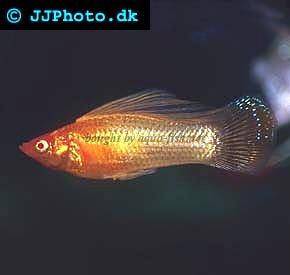
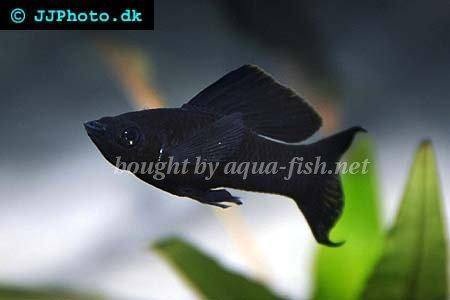
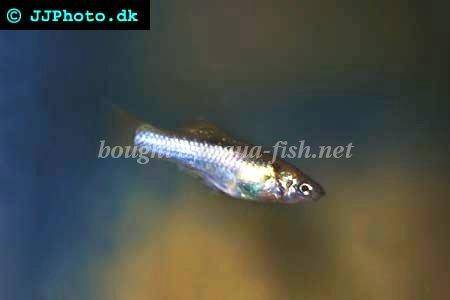
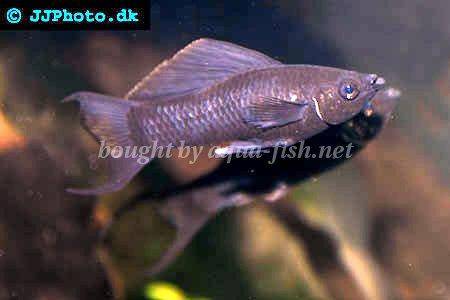
Sources
- The Complete Aquarium by Peter Scott
- Encyclopedia of Aquarium and Pond Fish by David Alderton
- Eyewitness Handbooks Aquarium Fish by Dick Mills
- Aquarium Fish by Ulrich Schliewen
- Focus on Freshwater Aquarium Fish by Geoff Rogers and Nick Fletcher
 Advice on keeping Rainbow Sharks focusing on temperament and tank setup
 How to care for Bala Sharks with details on feeding, breeding and with forum
 How to keep and breed Barbus Tetrazona (The Tiger Barb)
 An article dedicated to raising Black Skirt Tetras in fish tanks
 Breeding Guppies by Kendra Jones
 An article on breeding and caring for Nothobranchius rachovii
 A guide on caring for Cherry barbs with discussions
 Species classified as community aquarium fish
 Article and forum on caring for Neon tetras including diet and breeding tips
 Fish species (how we divide fish)
 A forum and guide on raising Glass bloodfin tetras
 A guide on keeping Platies with FAQ and discussion
 A guide on caring for Guppies with focus on shapes and patterns
 The Guppy Fish - A guide and forum on breeding and care
 How to care for the Black Molly including breeding and discussion
 How to take care of Kuhli loaches with forum and images
 A guide and forum dedicated to keeping Guppies in aquariums
 An introduction to caring for Killifish
 Keeping Motoro stingray (Potamotrygon motoro) in home fish tanks
 Pictures of the Black Skirt Tetra with Discussion
 Proper Care of Rainbowfish with Feeding and Breeding
 An article and forum dedicated to caring for Yoyo loaches