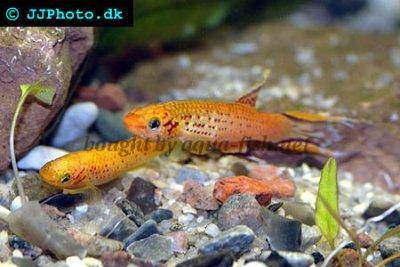
Lyretail killifish - Aphyosemion australe
Scientific name: Aphyosemion australe
Common name: Lyretail killifish
Family: Nothobranchiidae
Usual size in fish tanks: 5 - 7 cm (1.97 - 2.76 inch)
014
Recommended pH range for the species: 5.5 - 7
Recommended water hardness (dGH): 2 - 10°N (35.71 - 178.57ppm)
0°C 32°F30°C 86°F
Recommended temperature: 24 - 27 °C (75.2 - 80.6°F)
The way how these fish reproduce: Spawning
Where the species comes from: Africa
Temperament to its own species: peaceful
Temperament toward other fish species: peaceful
Usual place in the tank: Middle levels
Food and Feeding
Lyretail killifish are omnivores and as such should be given a diet consisting of live foods like brine shrimp, micro worms, and insect larvae. The diet should also include some flake or small pellet food.
Origin
Found in Western Africa and the rain forests of Gabon.
Sexing
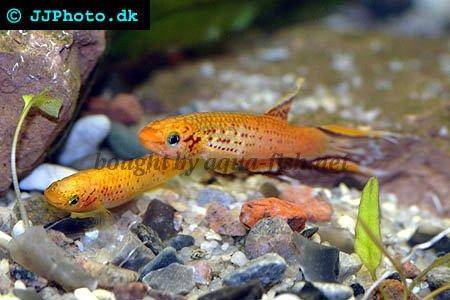
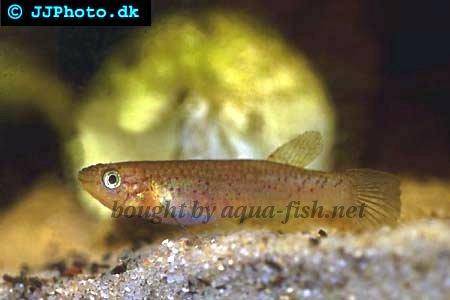
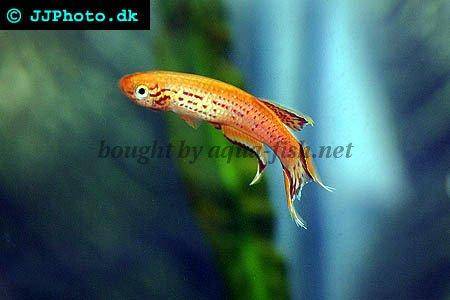
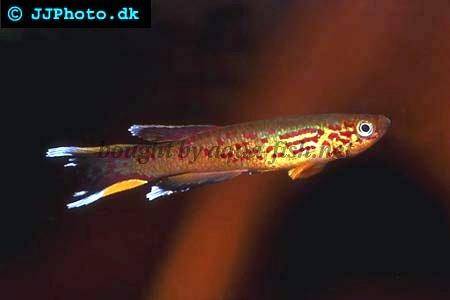
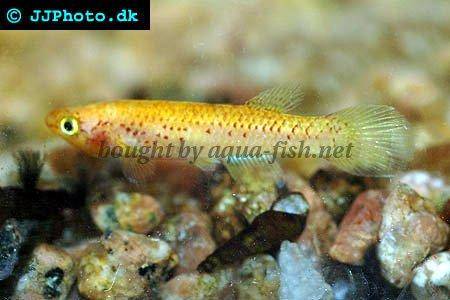
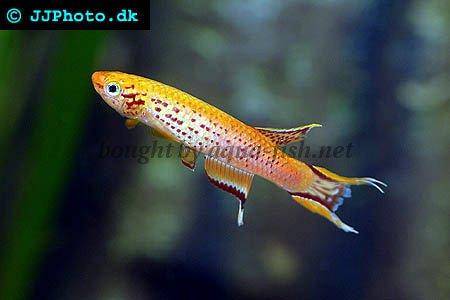
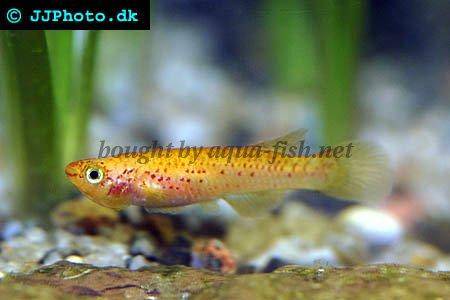
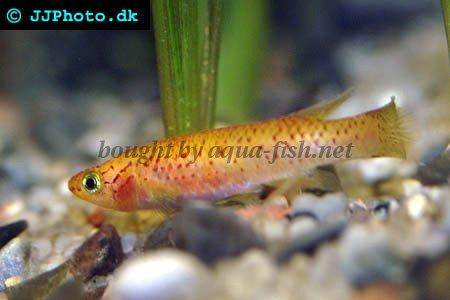
Females tend to be a dull brown color with red spots but the males are much more colorful with a background of brownish-yellow to brownish – orange and longer flowing fins.
Breeding
Lyretail killifish are normally one of the first killifish that keepers will attempt to breed as they are relatively easy to condition them to spawn. Their diet should consist of meaty foods like bloodworm to get them into condition, and the breeding tank should contain spawning mops or fine leaved plants. Eggs will be laid over a period of 10-12 days and only a small amount will be laid at a time, normally 10-20 per batch. Once the eggs are laid, either remove the parents or transfer the eggs to a different tank prior to hatching. The fry should be fed on newly hatched brine shrimp.
Lifespan
For a killifish, the Aphyosemion australe species can live for quite a comparatively long length of time, anything up to 3 years if given the correct environment.
Short description
Lyretail killifish are classed as easy to keep but regular, partial water changes are a must. They are a peaceful species and prefer to be kept in pairs. There are some color morphs available to purchase, these consist of a more pronounced yellow background to the fish. Salt can be added to the tank at a density of 4 teaspoons per every 10 gallons of tank water.
Pictures
Bought by aqua-fish.net from jjphoto.dk.
 Splendid
  Redchin
  Panchax
  Sixbar
 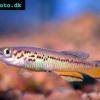 Amiets
 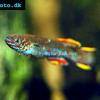 Blue
Blue  Blue
Blue 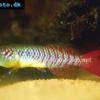 Guenthers
 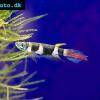 Banded