Aquarium fish diseases
common diseases, symptoms, treatments, and prevention
Quick links - Answers
- Preventing disease
- Five very common diseases in freshwater aquariums
- Freshwater ich / White spot disease
- Velvet / Gold dust disease
- Argulus / Fish lice
- Columnaris
- Dropsy
- Questions and answers
Advice by Mick, keeping fish since 1976

Brief Description
This article does focus on the most common diseases of aquatic fish. You're welcome to share your experiences or ideas on fighting fish diseases at the bottom of this page.
Preventing disease
Quite a few aquarists routinely treat their fish against various health problems or even retort to constantly keeping the salinity level high in their freshwater aquarium just to prevent outbreaks of certain contagious diseases. The problem with such an approach is that keeping a fish in a suboptimal salinity level and exposing it to various treatments will weaken it in the long run. If you want to keep thriving fish instead of barely surviving fish, prevention is a much better solution than continuous use of salt and disorganized emergency treatments.
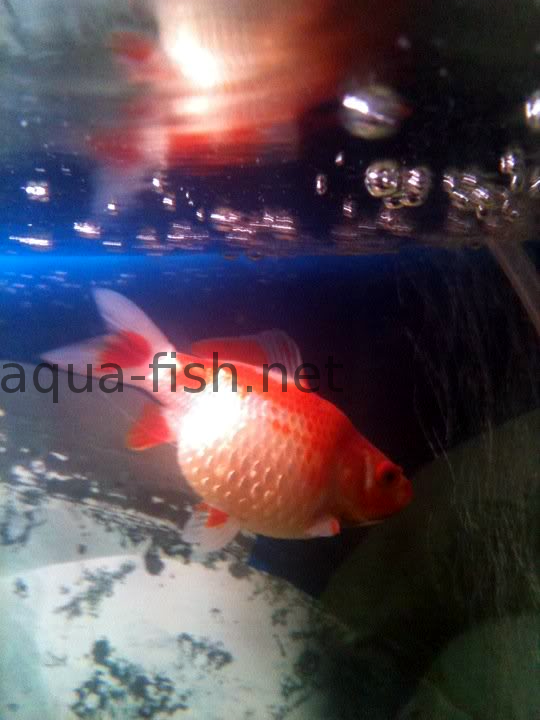
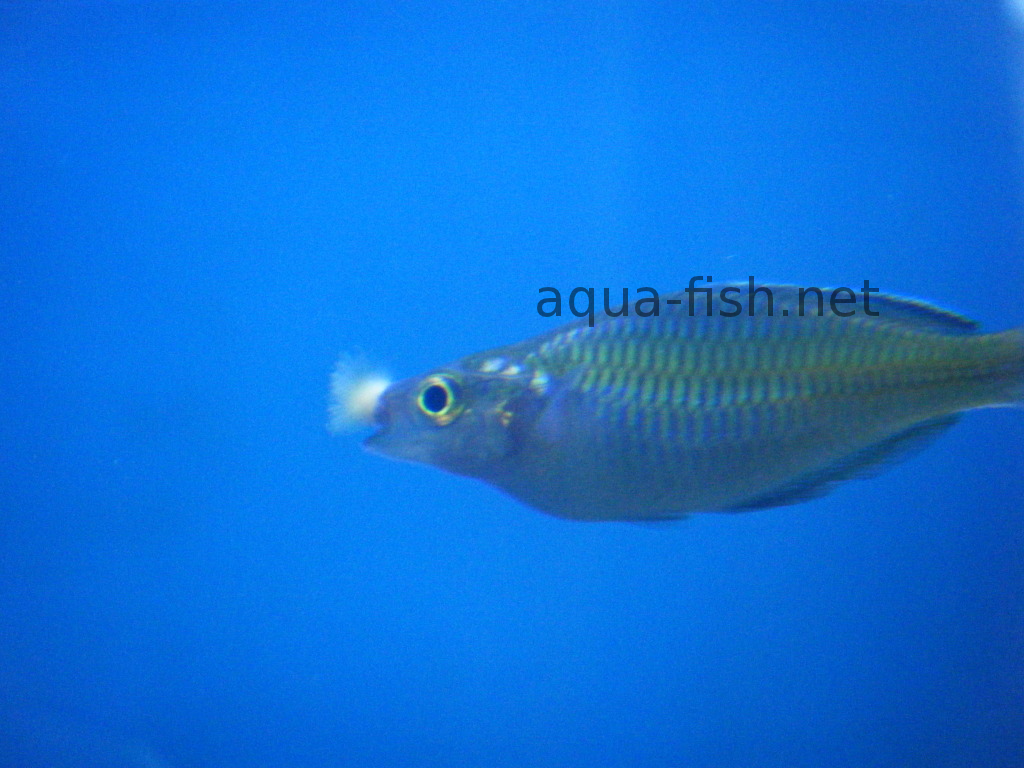
| Dropsy | Fungal infection | Popeye |
|---|---|---|
 |
 |
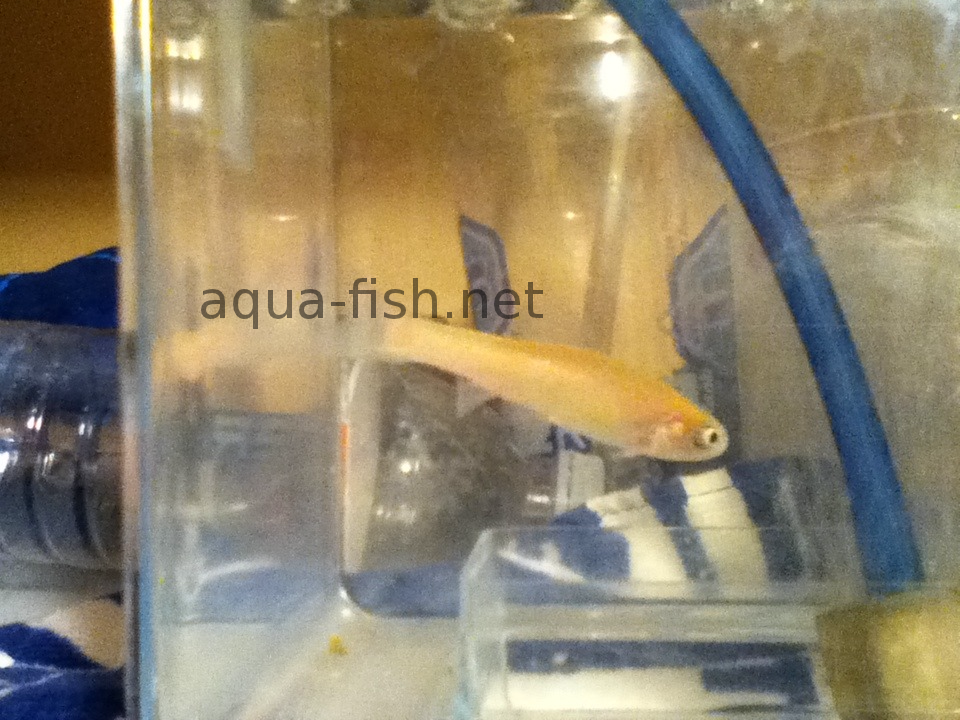 |
| picture source - fishtankforum.co.uk, reprinted with permission | ||
Here are a few suggestions that can decrease the risk of disease in your aquarium.
- Keep your fish in an optimal environment, i.e. optimal water temperature, optimal salinity, optimal pH-value, low levels of organic waste, and so on. Always read up on all species you plan on keeping and do not combine species with dissimilar preferences.
- Avoid stress in the aquarium by including suitable hiding spots and keeping bullies in check. Do not combine aggressive fish with species that can’t fend for themselves, fin-nippers with delicate long-finned fish and so on.
- Feed your fish a balanced, nutritious and varied diet. Read up on each species to learn more about its preferred diet.
- Always quarantine new organisms in quarantine tanks before they are allowed to enter the aquarium. You need to quarantine even healthy looking fish, because many diseases take time to manifest and are contagious long before you can notice any symptoms of poor health.
- Sterilize all new items before placing them in the aquarium, e.g. by cleaning them with bleach. (Keep in mind that most detergents are unsuitable for aquarium use.)
Five very common diseases in freshwater aquariums
Freshwater ich / White spot disease (Ichthyophthirius multifilis)
Freshwater ich is caused by the parasite Ichthyophthirius multifilis and is commonly known as White Spot Disease since white spots is a characteristic symptom. The white spots are actually cysts and can look like grains of salt on the skin of the fish. When a cyst is mature, it will fall off the fish and sink down to the substrate where thousands of new parasites will emerge. The parasites will enter a free-swimming stage and scout the aquarium for suitable hosts. When a parasite has found a fish, it will attach itself and form a new cyst.
As mentioned above, the most characteristic sign of ich are white spots on the skin of the fish. The fish can also scratch itself against rough surfaces in the aquarium and experience laboured breathing.
Since the parasites go through a free-swimming stage, this disease is highly contagious and the entire aquarium must be treated. The parasite is only vulnerable to treatment during its free-swimming stage and you must therefore carry out several treatments at regular intervals to make sure that all parasites are dead. If you ask ten different aquarists about the best method of treating ich, you may very well end up with 12 different answers. A commonly used method is adding salt to the water, ideally slowly over time as not to chock the fish. Different fish have different salt tolerance, but it is advisable to get up to at least 25-40 teaspoons of salt per 20 L of water. Another popular remedy is malachite green, but this medication should not be added to aquariums with scaleless fish.
Many aquarists turn up the water temperature when combating ich since this speeds up the life cycle of the parasite, but you should keep in mind that a sudden increase in water temperature can stress fish and lower the oxygen levels (which is especially problematic for fish already experiencing laboured breathing).
Velvet / Gold dust disease (Oodinium)
Velvet is also known as Gold Dust Disease and both names allude to the appearance of infected fish. Before it turned out to be a disease, many aquarists actually appreciated having velvet in their aquariums since it gave the fish an appealing look. The disease is however almost always fatal if left untreated in aquariums. In freshwater, velvet is typically caused by dinoflagellate parasites of the genera Oodinium. Some fishes, e.g. danios, are more prone to velvet than others, and they can serve as breeding grounds and cause the amount of parasites in the aquarium to become so high that even more resilient species eventually succumbs.
The most characteristic symptom of velvet is a velvety appearance, sometimes with a golden or brownish layer of “dust”. The “dust” will usually appear around the gills first and then gradually spread to other parts of the body. Infected fish may clamp their fins, scratch their skin against rough surface in the aquarium, and experience laboured breathing.
Species especially prone to velvet can usually live with the disease for quite a long period of time, but this doesn’t mean that you should put off treating them. Velvet is usually treated with acriflavine (trypaflavine) or copper depending on which species you house in your aquarium. A standard dose is 0.2 mg of copper/L or 1 ml of acriflavine (trypaflavine)/L. It is very important to calculate the exact amount of water in your aquarium, because both treatments are dangerous to fish. Carry out a series of small and very frequent water changes as soon as the treatment is over.
Argulus / Fish lice
Argulus, also known as fish lice, is a crustacean parasite that will attach to the fish using curved hooks and suckers. This parasite has a direct life cycle and will only infest fish. Mating takes place during the free-swimming stage of the lifecycle and egg clusters are released in the aquarium. After being hatched, the parasite must find a suitable host within four days, otherwise it will die. The whole life cycle takes between 30-100 days depending on water temperature.
When the parasite has attached itself to a fish, it will insert its needle-shaped mouth into the tissue. This parasite causes patches of swollen and bleeding skin and can affect the entire body, including fins and gills. It feeds on blood and other bodily fluids, and it causes further harm to the fish by injecting digestive enzymes that can lead to systemic illness. It is sometimes possible to see the parasite with a naked eye because this oval, flat parasite can reach a length of 10 mm. Other symptoms are small dark spots on the skin, typically behind the fins and around the head. Affect fish are known to clam their fins and scratch themselves against rough surfaces in the aquarium.
A 10-30 minute long potassium permanganate bath (10 mg potassium permanganate per litre water) is usually enough to kill the argulus parasite. In some situations, you have to treat the entire aquarium to get rid of them by adding 2 mg potassium permanganate per litre. It is possible to pick off the parasite from the fish with a pair of forceps, but it can be tricky to find all the parasites and remove them.
Columnaris (Chondrococcus columnaris)
Columnaris is commonly known as mouth fungus, but it is actually caused by a bacterium named Chondrococcus columnaris. It is usually a sign of poor water quality in the aquarium, so you need to start carrying out more frequent water changes if this problem manifests. Newly introduced fish are especially susceptible to the bacterium.
The first symptoms of columnaris are usually grey or white lines or patches on the body of the fish, especially around the mouth. It can look almost like cotton. The fish will have a hard time eating and the bacteria will also release toxins that weaken it further. The fins can start to deteriorate and if the gills become affected the fish will experience trouble breathing. A severely infected fish will usually clamp its fins.
Since this disease is caused by bacteria, antibiotics are usually required. It is important to treat as soon as possible, because when the disease has spread to the internal organs the chance of raring your pet back to health is slim. One example of a recommended treatment is 10-20 mg of chloromycetin per litre water. After the initial dose, it is important to follow up with a second dose two days later.
Dropsy
Dropsy is a common aquarium disease that will still know very little about. Most experts believe that it is caused by bacteria, but some have suggested that viruses may be able to cause dropsy as well. Dropsy is especially common in fish that is already weakened by something, such as poor water quality or improper diet.
The main symptom of dropsy is a swollen or hollow abdomen. The scales of the fish can also stand out over the swollen areas, giving the fish a “pine-cone” appearance. An affected fish will typically become listless and lose its appetite. The kidneys become damaged which leads to fluid accumulation and/or renal failure.
Dropsy is difficult to treat and often fatal. In many cases it is best to euthanize affected fish to save it from suffering and prevent the problem from spreading to other fish. If you wish to treat, it is possible to medicate the water, but if your fish is still eating it is better to give it medicated food since this is an internal disease. Purchase chloromycetin or tetracycline (other antibiotics can work as well, but check with a vet or experienced aquarists to be sure) and make a 1% food mixture. This means a standard 250 mg tablet is enough for 25 g of fish food.
Source: Fish disease section at Aquatic Community.
Questions and answers
The below-listed questions were added here on March 23th due to merging aqua-fish.net/answers with related articles. You're welcome to submit own questions too, but firstly make sure that they haven't been answered on this page yet, please.
-
What causes the disease melanophore migration?
Answer: Melanophore Migration is usually caused by chemical's such as ammonia or chlorine spikes, or injury. You will see a black colour on the fish only when the problem has been resolved and it has begun to heal.
-
What do black spots on cichlid fish mean?
Answer: They could have scabs from digging in sand/gravel, or it could be a larval stage of a parasitic fluke.
-
Why do my red eye tetras have white things on them?
Answer: Normally this is due to white spot being present on the fish. Treat the tank with a suitable parasitic treatment and run the whole course even if the fish appear to have overcome it.
-
What kind of disease presents as a white spot?
Answer: Most commonly this is ick. If it is it will appear as a sugar/salt size bump or dot. This is a common parasite and can be treated with both medication available at a local pet store and by rising your aquarium temperature by one or two degrees. This temperature increase expedites the Ick life cycle and when used with medication is quite effective at eliminating the disease.
 Aquarium medications and curing diseases in fish
 Aquarium refugiums
 Benefits, use and preparation of distilled water for a fish tank
 Causes, symptoms and treatment of the Neon Tetra Disease
 Treating Dropsy in Aquarium Fish
 Ich; The white spot disease and its treatment
 A page that explains the life cycle of Ichthyophthirius multifiliis and its treatment
 Treating the swim bladder disease in aquarium fish
 Symptoms and treatment of the fin rot disease in aquarium fish
 What is chloramine and how it affects fish in aquariums