The purpose of using filtration media in aquarium filters
Quick links - Answers
- Biological media get very dirty - what to do
- Filter media for discus
- Canister filter and media setup
- How and when to change filtration media
- Media per gallon
- What media will remove ammonia
- Can dirty filter media cause rise in ammonia
- Do all aquarium filter media grow beneficial bacteria
- Do I really need bio media in my external filter in my planted aquarium
- Should you put new media in your pump after treating white spot
- What filter media should I use for internal filter
Advice by Jan, keeping fish since 1995

Brief Description
If you came here searching for online suppliers of filtration media, simply click this link. In case you need knowledge and answers, continue reading. Bear in mind that if you cannot find answer on your question in the article below, you're welcome to ask at the bottom of this page!
Introduction
No one has ever had the heart to stand up and say that filtration may not be essential, because no one has yet had the courage to try and operate an aquarium without filtration. And hopefully they never will. The reason being that the costs and the effort involved in operating an effective aquarium filter media system are so minimal that it is not worth the argument, except possibly in large volume aquariums populated by very few fish and a large range and number of healthy aquatic plants.
Over all the aquarist’s goal should be to provide the finest environment for his fish to live and flourish in and much though must be given to find the ideal filter media to produce the best results within a realistic budget. Filter media for aquariums need not be expensive and there are many options available that can keep the cost within reasonable levels.
Once the decision has been made to install a filter system for your aquarium the next question will be which one? There are a few to choose from, some of them simple and some of them fairly complicated, although it doesn’t necessarily mean that the more complicated the filter system, the more effective it is.
One of the most important calculations that have to be made is the filter capacity required to operate an effective filtration system for the aquarium. The major factors to be taken into account will be the size of the tank, the number of fish to be kept and how often you want to process and filter the water in the tank. Most leading manufacturers will provide a list of criteria that their filters supply and from these figures you should be able to choose which filter capacity you will require to operate your filtration systems to a satisfactory level that meets both your and your fish’s requirements.
Pictures of filtration media for aquarium filters
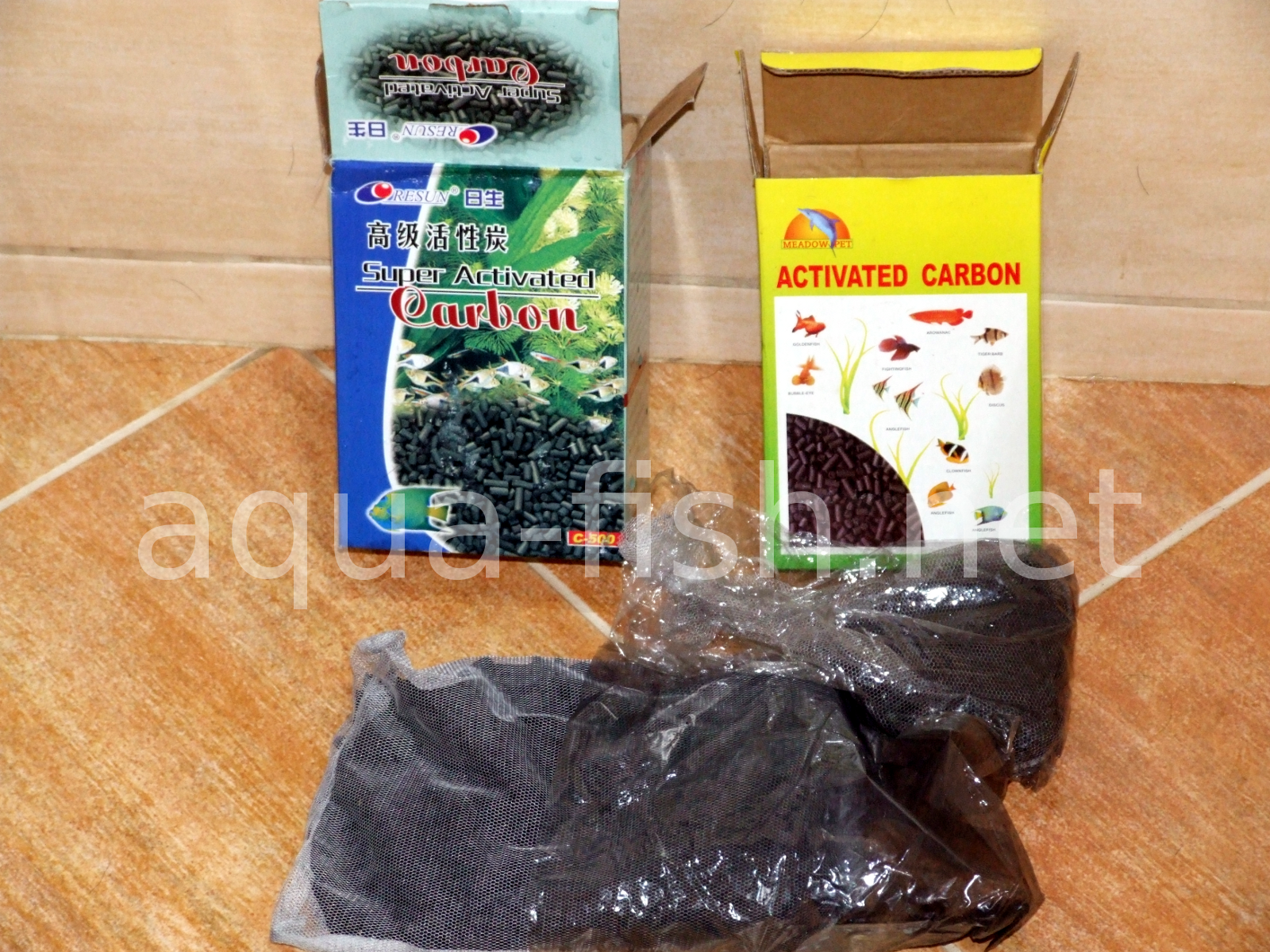
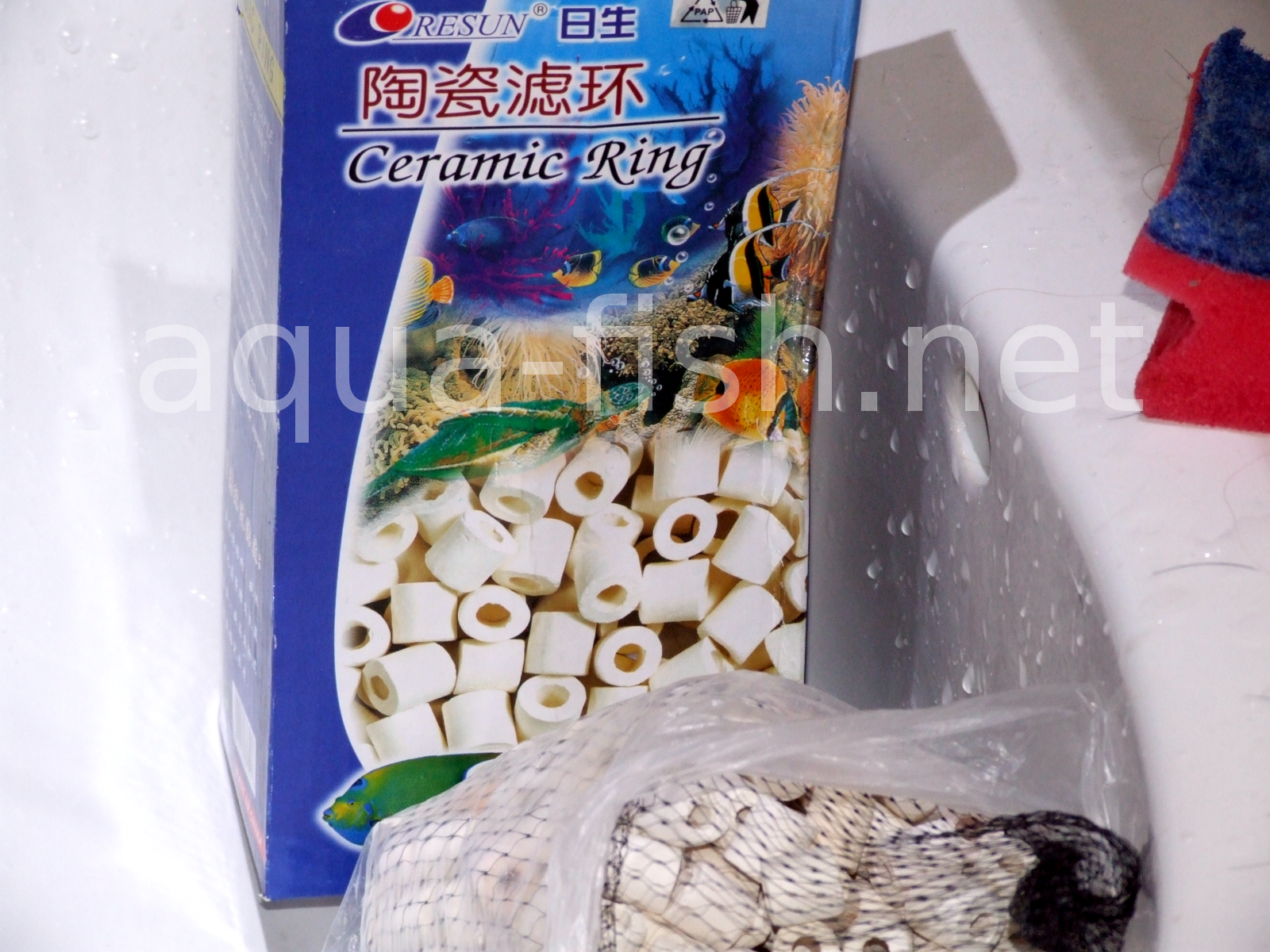
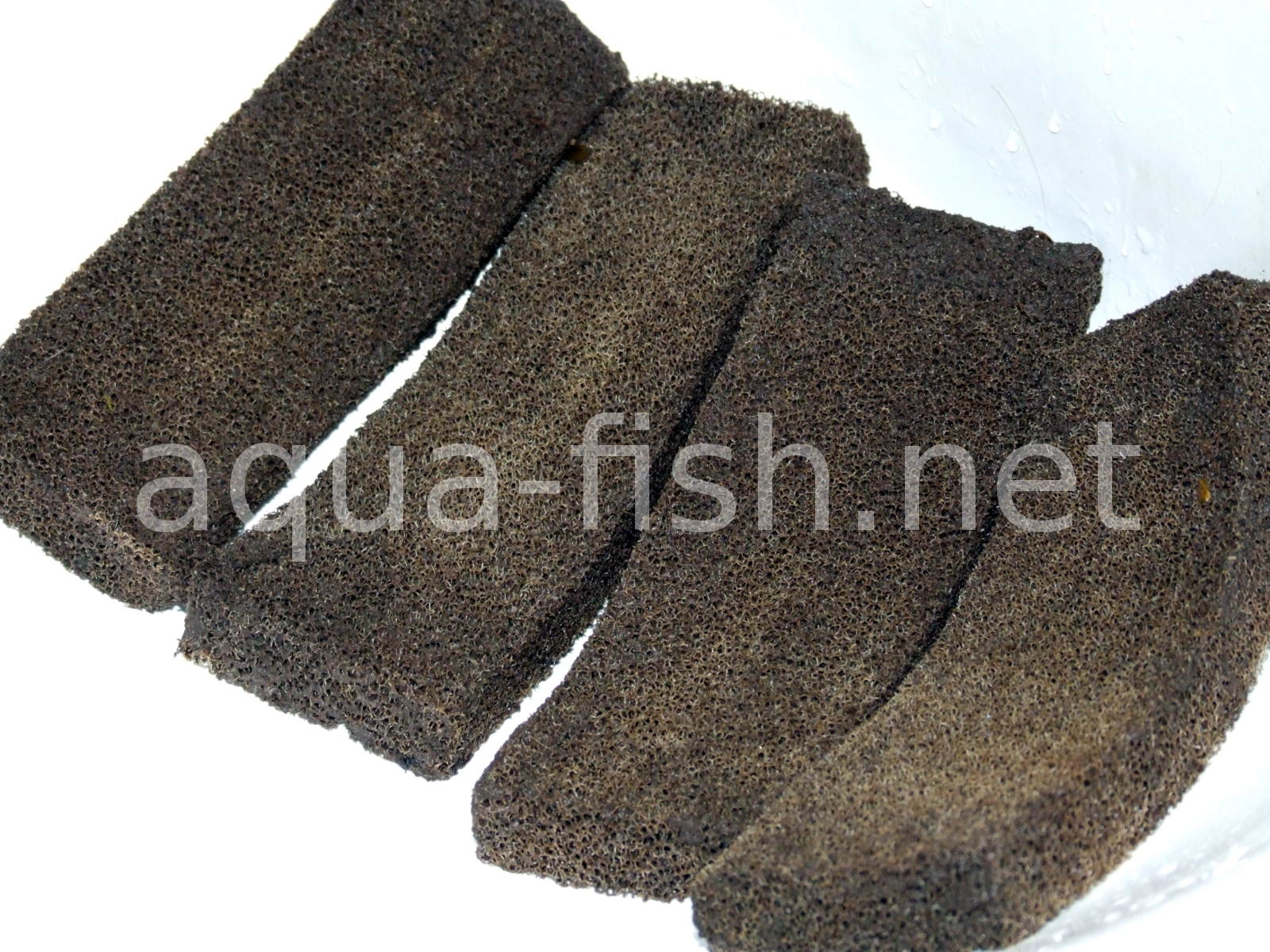
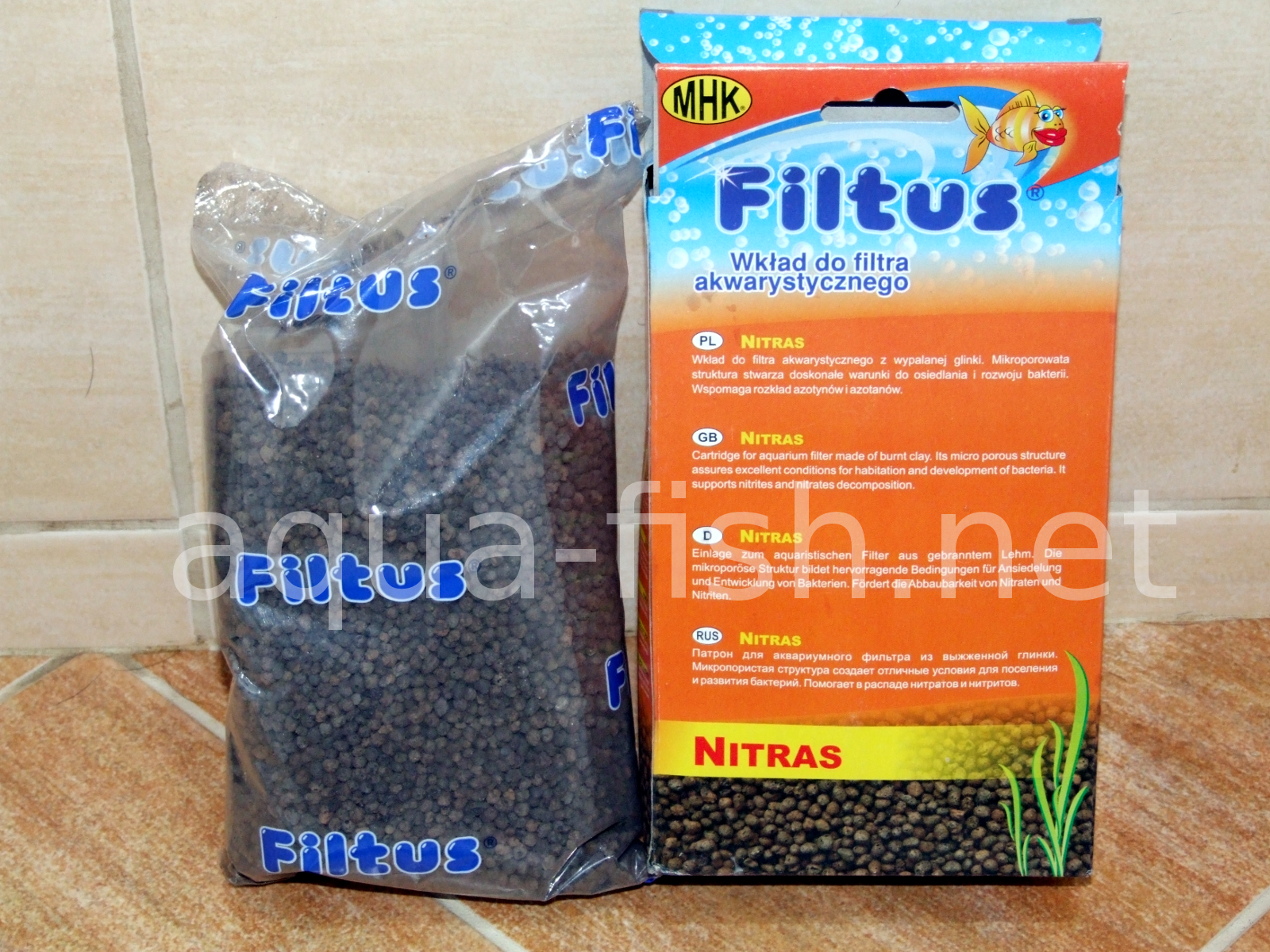
Experts in aquarium management will always advise to have more than one filter for all the obvious reasons. The larger the tank the more sensible it is to have filtration capacity in reserve, either to prevent clogging or if the motor fails in one of them.
There are a few explanations on the more “main stream” choices of aquarium filter media. The role of mechanical filtration is to separate solids such as fish food or excretions from the tank water. This form of media can be highly effective, through sieving the particles out of the stream of water flowing through the tank. Through ensuring that these particles are removed from the aquarium’s water, the levels of water purity will be high enough to keep the fish in the tank healthy.
Aquarium filter media can be made from sponge material, polyester fibres or other similar media, they should be always housed inside a filter and should be maintained in a condition that they are capable of trapping the particles. To draw the water into the filtration chamber pumps or fans are used dependant on the type of filter. Water is drawn through the filter media by a pump or flow of bubbles. The rate of water flow will be reduced as these particles are filtered from the aquarium water. Gradually through time and usage the filters will become clogged up with the particles that they have removed from the water and become gradually ineffective. This is why it is so important to maintain the filters, either through keeping them clean or replacing them as they become worn down.
Not only particles in the water have to be filtered out but also the chemicals that are introduced into the water during the process of the aquarium’s operation. Obviously chemicals are an entirely different ball game from dirt particles. They also require a process of chemical aquarium filtration that is different and aquarium filter media that is entirely different also.
The goal of chemical filtration in aquarium operation to is to harness the reactions between the various chemical compounds found in an aquarium and capture and remove the accumulated toxins, chlorines and heavy metals that can be harmful to the fish. Carbon and/or charcoal filter media can carry out this task, but the aquarist should be fully aware that these kinds of filters have a very limited life span, and need to be changed on a very regular basis.
Anyone who fails to replace their carbon of charcoal filters stands a very fair chance of poisoning their fish.
The last form of preventative filtration that the aquarist needs to know about is biological filtration. This form of filtration is highly important to the environmental equations involved in the aquarium and needs to be handled very carefully. The purpose of this form of filtration is to maintain the level of “friendly “bacteria in the water. The filters need to be hand washed, and preferably with tank water rather than tap water where the chlorine levels and the water temperature may be high enough to destroy the bacteria. Many aquarists maintain two set of filters and change only half at a time to keep these highly important bacteria in good shape to carry out their very important role.
While it is very important to install an effective filtration system for an aquarium and make all and every effort to ensure that it operates and is maintained to create a proper and healthy environment for the fish in the tank to thrive in, effort should also be made to reduce the work load on the filters by making sure that the input of excessive foreign bodies in the tank is reduced to a minimum. One of the biggest causes of clogging in aquariums is through overfeeding the fish. Fish in a tank will only eat what is in the tank for the first five minutes after it has been introduced. As no one yet has come up with a way to individually hand feed aquarium fish, all the excess food will backflow through the filters and clog them. Calculating the exact amount of food to give comes only with experience and through study and making the proper calculations. Until that knowledge has been achieved, special attention should be made to the filters soon after feeding to ensure that they have not become blocked.
Aquarium filter media maintenance is a bit of a balancing act, but once under control will lead to a pleasant environment and healthy fish.
Aquarium biological filter media get very dirty - what to do?
If any media becomes dirty, it only means it's time to clean it. If this problem occurs once a week, then you should reconsider using another filter in your fish tank or upgrading to a filter that can filter more water per hour. If there are plenty of excrements and particles that make a filtration media dirty (dead plants for instance), the only way out of this situation is enhancing filtration. I, personally, have experienced such a problem and had to add another filter into the aquarium. My aquarium was overstocked, plus it was heavily planted which causes a lot of plants float here and there - they were clogging the filter. After adding the second filter, water quality became better and fish were more happy than before.
Filter media for discus
In fact Discus fish won't need different filtration media. Foam, ceramic rings and perhaps activated carbon is all you need. If you want to enhance level of nitrites/nitrates decomposition, you may consider buying a media that helps decomposing nitrites and nitrates. This additional media has to be added to the filtration chambers just like any other media.
Canister filter and media setup
The filtration media should be ordered this way: foam, ceramic rings, activated carbon, nitrites and nitrates removers. When you buy a new aquarium filter, you should take pictures of how it has been setup - which filtration media belong here and there. Following instructions given by manufacturer is always recommended. It's always easier to take a couple of pictures, even on your cell phone, and check them later than storing the box and instructions manual for years.
How and when to change filtration media
Every filter comes with instructions; Manufacturers recommend changing filtration media every now and then depending on how big is your filter and the way how it was designed to work. However fish keepers don't have to act strictly upon these instructions. A 100 gallon tank with 2-3 fish will need different maintenance than a 30 gallon tank with 20 livebearers! In order to tell the right time when it's necessary to perform a filter media change it's recommended to test water in your aquarium. Use test kits that allow you to measure pH, presence of ammonia, nitrites and nitrates. As it's already mentioned above, different setups require different approaches, so a question Aquarium filter media per gallon? cannot be 100% answered. Actually you have to buy a filter that's designed for size of your fish tank.
Order of filtration media should not be changed as time goes by. Ceramic rings have their own place - usually a standalone chamber - and such a chamber should be always used for ceramic rings. The same applies to foam and activated carbon.
What media will remove ammonia?
It's already explained here: The way the cycle works, is to convert ammonia into less toxic nitrites and then into even less harmful nitrates using two different types of bacteria held in the filtration system. [The Essential Nitrogen Cycle] So you need a colony of bacteria that remove ammonia. By adding filtration media to your filter you're helping these colonies to reproduce and work more effectively. In cycled aquariums these colonies live in a substrate as well as in a filter. In newly setup fish tanks the colonies of nitrification bacteria don't exist and it'll take some time until they settle down and colonise the entire tank. That's why you shouldn't use tap water when cleaning filtration media! Use water from your aquarium instead! Tap water contains chlorine which may kill all bacteria colonies present in the filter media.
Can dirty filter media cause rise in ammonia?
The answer is simple. YES! When filtration media get dirty, the filter won't be able to achieve maximum capacity (gallons/liters per hour will not reach possible maximum) and thus water won't be filtered as good as before. Lack of filtration may lead to high levels of ammonia or other substances that are naturally decomposed in a filter.
Do all aquarium filter media grow beneficial bacteria?
Practically - yes. On the other hand, filter media are designed differently for a reason. Foam and ceramic rings are a good place for bacteria while surface of activated carbon doesn't allow that nice growth. Actually beneficial bacteria grow anywhere including decorations, substrate, caves, driftwood.
Do I really need bio media in my external filter in my planted aquarium?
No. Planted tanks with fish than don't produce a lot of excrements can actually perform very well with basic filtration.
Should you put new media in your pump after treating white spot?
Yes. Basically you shouldn't use a cycled filter media in a tank where you currently treat some disease no matter it's white spot or dropsy. Often people cannot simply take the filter out from a diseased tank as it provides aeration, so it's recommended to put cycled filter media into a backup tank or into bucket where the beneficial bacteria can live their own life. When treating any disease, remove activated carbon from the filter.
What filter media should I use for internal filter?
This is up to you; Foam is basically in every filter. Ceramic rings won't do any evil as well as nitrites/nitrates removers and activated carbon.
Don't forget to replace your filter media regularly!
Recommended reading about filters
- The Purpose Of An Aquarium Filter
- Internal and External Aquarium Filters
- Tetra Whisper Filter
- Canister Filter in an Aquarium
- To Filter or not to Filter a Fish
- Fish Pond Filters
- External Filter for a 26 Gallon or Bigger Aquarium
- Aquarium Filter Cartridges
- Undergravel Filters
- Aquarium Filer Pads
- About Fish Pond Filters
- Magnum and Penguin Aquarium Filter
- Aquarium Filter Systems
- Under Gravel filter Cleaning
- Diatom Filters for Aquariums
Online suppliers of aquarium filtration media
If any of the links shown in the list below doesn't work, inform us via form at the bottom of this page, please!
 Pros and cons of using fluidized bed filters with fish tanks
 Advantages and disadvantages of using sump filters with aquariums
 A guide on choosing the right filtration system for the aquarium
 biOrb Filtration Principle and Diagram
 Cheap aquarium filters and cheapest DIY fish tank filtration
 A forum and review dedicated to Tetra Whisper Filters
  How and why to use undergravel filtration in fish tanks
 How carbon in an aquarium filter affects the quality of the water
 A DIY external filter for a 26 gallon or bigger aquarium
 To filter or not to filter a fish tank
 Review of Fluval external aquarium filters (105, 205, 305, 405)
 Advantages and disadvantages of using diatom aquarium filters
 Forum and usage of internal and external aquarium filters with diagrams
 Power Filters for Aquariums
 How sponge aquarium filters work
 Review of Magnum and Penguin Aquarium Filter
 Types of Aquarium Filter Cartridges
 Under Gravel filter Cleaning
 Using a canister aquarium filter for filtration