About ammonia test kits, What to test for in an aquarium, Test example & Forum


Quick links - Answers
- The process of nitrification
- Cycling and lethal levels of ammonia
- Testing the water
- Why to add plants
- The NO2 test
- FAQ
Advice by Jan, keeping fish since 1995

Brief Description
This article is an easy-to-follow guide on testing aquarium water, and also contains a real case of performing NO2 test with results (nitrites are a product of decomposition of ammonia by nitrification bacteria). We also list answers on this page and in case your question isn't covered on this page yet, you're welcome to ask us at the bottom of this page! Sharing experiences is welcome too!
Introduction
The most toxic of the nitrogenous wastes that can build up in aquarium water is Ammonia (NH3). Ammonia, once it reaches a certain concentration in the water will cause the fish to become increasingly unwell, and if the presence of ammonia in the water is allowed to remain undetected for a protracted period, it will eventually cause the fish to die. Ammonia present in the water will affect the health of the fish as it will burn their gills and as it enters the body; their vital organs will also start to be affected. Some species of fish seem to be more resistant to the effects of Ammonia compared to others but as a general rule Ammonia will shorten the life span of nearly all fish quite rapidly, often they will only survive for a matter of days. Ammonia in the tank is generated constantly as the organic materials present break down. The fish in the tank also metabolically produce ammonia which they excrete through their gills. Concentrations of ammonia in the tank as they increase will gradually cause the fish’s gill to become blocked and reduce their ability to absorb and maintain the desired quantities of oxygen in their blood.
The process of nitrification
The cycle of life in the tank is very finely balanced, with bacteria in the tank’s filter utilizing ammonia as a source of energy which will cause the ammonia to become nitrite. Bacteria, in a different form, will use the nitrite to turn it into nitrate, which is harmful to the fish in the tank. The nitrate needs to be removed or at least diluted on a weekly basis, by removing around a quarter of the water in the tank and replacing it by water after dechlorination.
Cycling and lethal levels of ammonia
Once a tank has undergone the complete cycle there should be no reading of Ammonia in the tank, the colonies of bacteria in the filters should be able to cope with any amount of Ammonia that is produced form the fish waste and detritus so the acceptable readings should always be zero, even a small reading of .25 ppm can be lethal to many species of fish.
If the tank has been cycled correctly there should be no ammonia present, nitrates should be the only test that gives a positive result.
If the dilution of the water is not being done properly, or in too distant time frames, the ammonia levels in the water will gradually increase, and the fish in the tank will begin to display the earliest signs that things are not well with their health. The fish will begin to appear more frequently near the surface of the tank, and begin to gasp. This is a sign that they seeking oxygen intake. If the fish in tank lie motionless at the bottom of the tank, then this as sign that their natural survival instincts are telling them to conserve energy. Their breathing will be heavy and labored. These are signs of distress that any experienced aquarist will never witness as they simply will not them allow to occur.
The testing
Experienced aquarium operators, either in a domestic or a domestic application, will, as part of an overall maintenance program, will have an ammonia test kit as an integral part of their equipment, and will use them on a weekly basis to ensure that there are not traces of ammonia present in the water. This is a very important point that many less experienced aquarists fail to grasp, till it is too late.
Once again, there is no such thing as an acceptable level of ammonia present in water in an aquarium. Any measures taken such as changing water need to be a preemptive measure and not as an afterthought.
An ideal situation in an aquarium is that ammonia is not present in the water, even at the lowest concentration. When an aquarist checks ammonia levels in the tank, they are actually checking to see if ammonia is present. In the unlikely even that it is, they need to be ready to swing into immediate action to dilute the water in the tank to levels where the ammonia levels are reduced to 0.005ppm, and there are those who say that this proportion may be too high.
In a perfect world, the readings for our aquarium water will be perfect every time that we test; in reality there are occasions when the reading s can be different to what we expect them to be. When we add more fish to the aquarium this places a larger amount of ammonia being produced from the fish waste therefore the bacterial colonies need to increase so that they can convert this extra load, this takes time so during this period the filters may still not remove all of the ammonia from the tank immediately. We should also remember that on the other end of the subject, the beneficial bacteria need ammonia to survive, if a filter is switched off or removed from the tank for a period of time the bacteria will start to die off and once in use again, the filter will need to be re-cycled to become efficient.
Ammonia levels will never drop when the tank is stocked; if the tank is overstocked the filters are probably not large enough to hold the correct amount of media that houses the bacteria thus causing a rise in ammonia levels.
There are instances when the aquarium may decide to start a mini-cycle. This is where the ammonia may suddenly start to rise leaving you with ammonia and nitrates present in the tank at the same time. These are usually short lived and can settle down as quickly as they appear but regular testing will pre-warn you when they are about to occur.
One side effect of having ammonia present in the water is sudden outbreaks of algae in the tank, the algae will feed from the ammonia and multiply, this is why algae is nearly always a problem when tanks are first set up, the ammonia, nitrite and nitrate levels are all unbalanced and the algae make the most of this as to them they have a good food supply.
Adding plants
Adding plants to the tank can help with ammonia levels as they too can use this as food as well as nitrates that are present, the plants themselves can also increase the ammonia levels if any rotting leaves are allowed to stay in the tank, if you spot any dead or decaying leaves remove them immediately.
There are certain mosses that people add to the tank such as Christmas moss, these are added to help with the nitrates but without the keeper realising they can also help with the ammonia levels.
Some companies have produced compounds that can be added to the tank i.e. Ammo-Lock, these make any ammonia safe to the fish but the ammonia is still present in the water and the only way to remove the locked ammonia is by regular water changes. Using these is a good short term method to deal with the problem but there must be a reason why the ammonia is not being dealt with by the filters so this should be sorted oout as well, the usual cause has to be overstocking of the tank.
There are some very good ammonia test kits available on line. Here are just a few examples.
- Seachem Ammonia Alert: This simple yet effective kit contains four chemical sensitive sensors that will change color when the presence of ammonia is detected and will even provide a reading on levels.
- Nitrate Liquid Test Kit: Rapid and accurate, the Nitrate Liquid Test Kit provide a reliable test for freshwater aquariums. Contains two dropper bottles to allow accurate dispensing of test solutions, the kit comes with easy to follow instructions and color chart.
The NO2 test
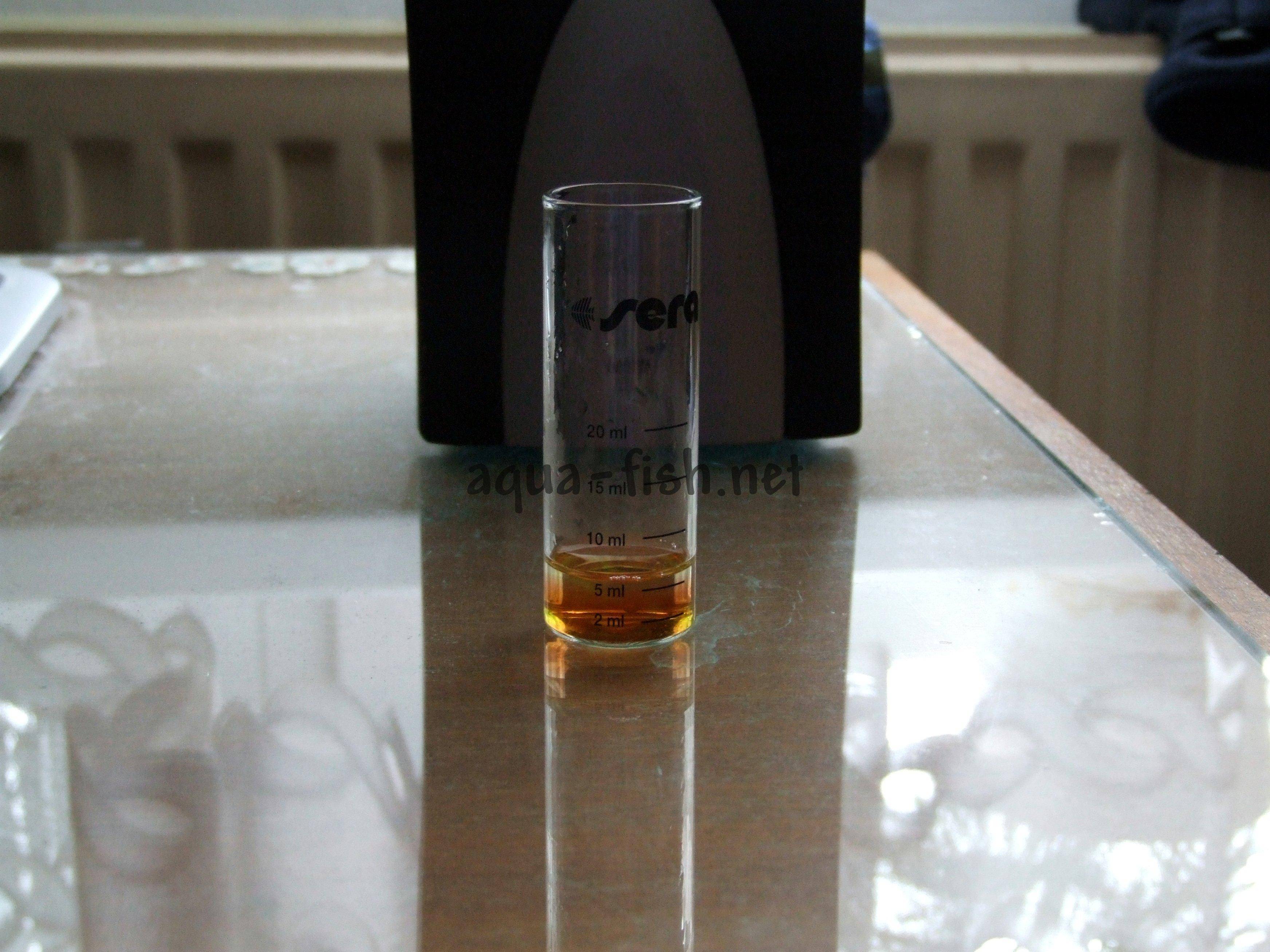
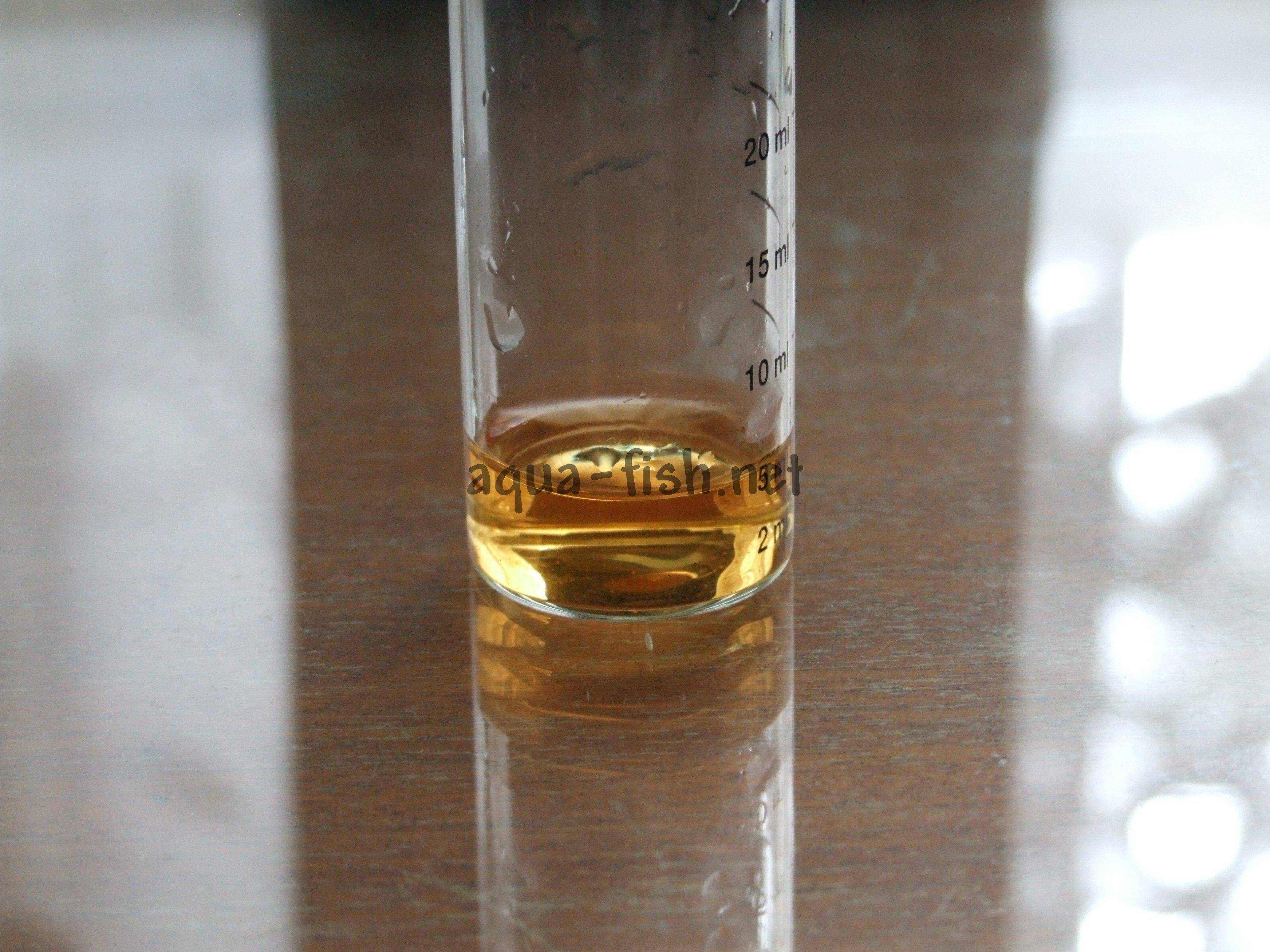
After oxidation of NH3 there is another poisonous substance in aquariums; NO2. Man should test water each week for concentration of NO2. Here is a step-by-step illustration of how poisonous water can change to normal after changing about 30% of water in the aquarium.
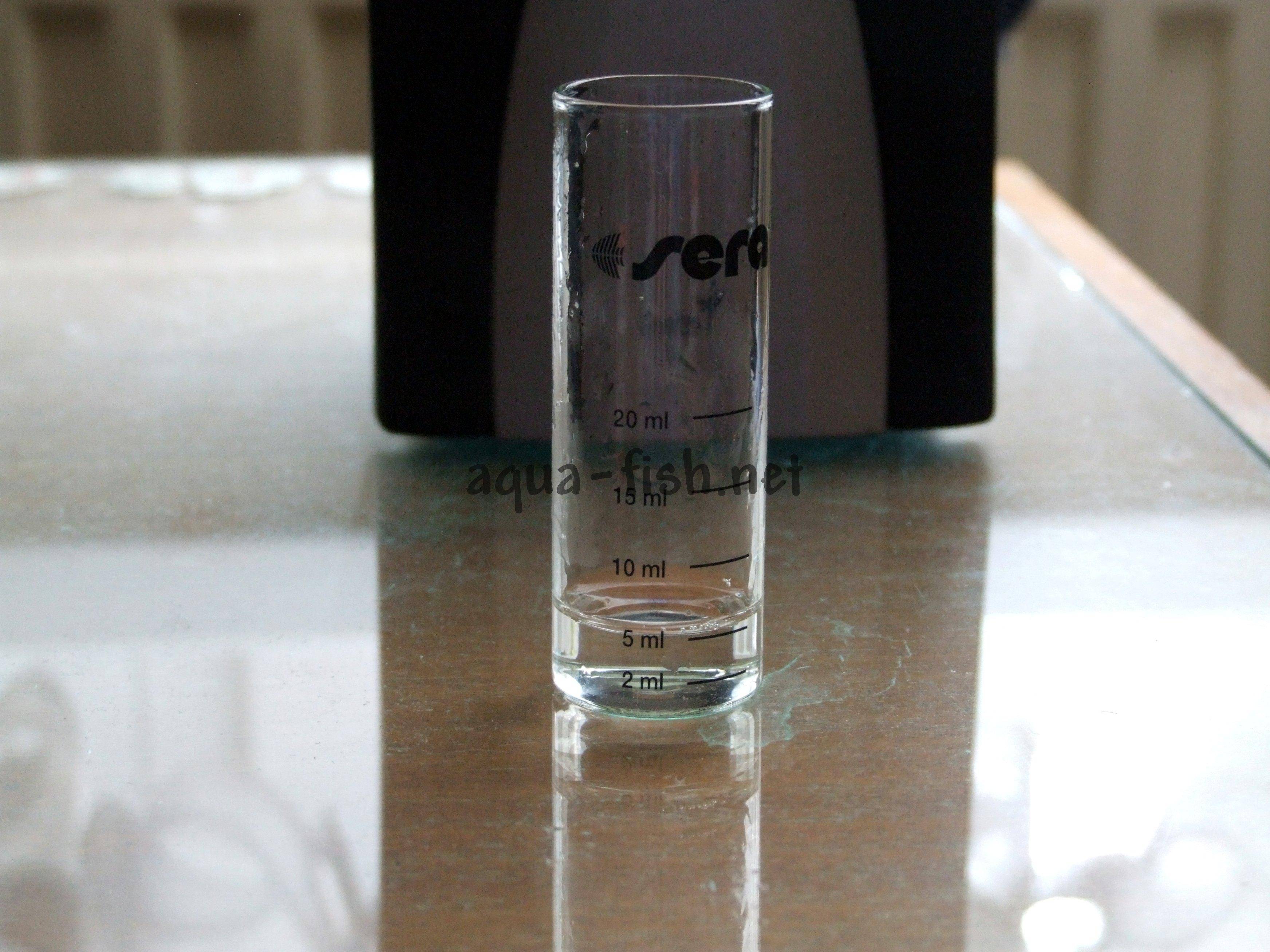
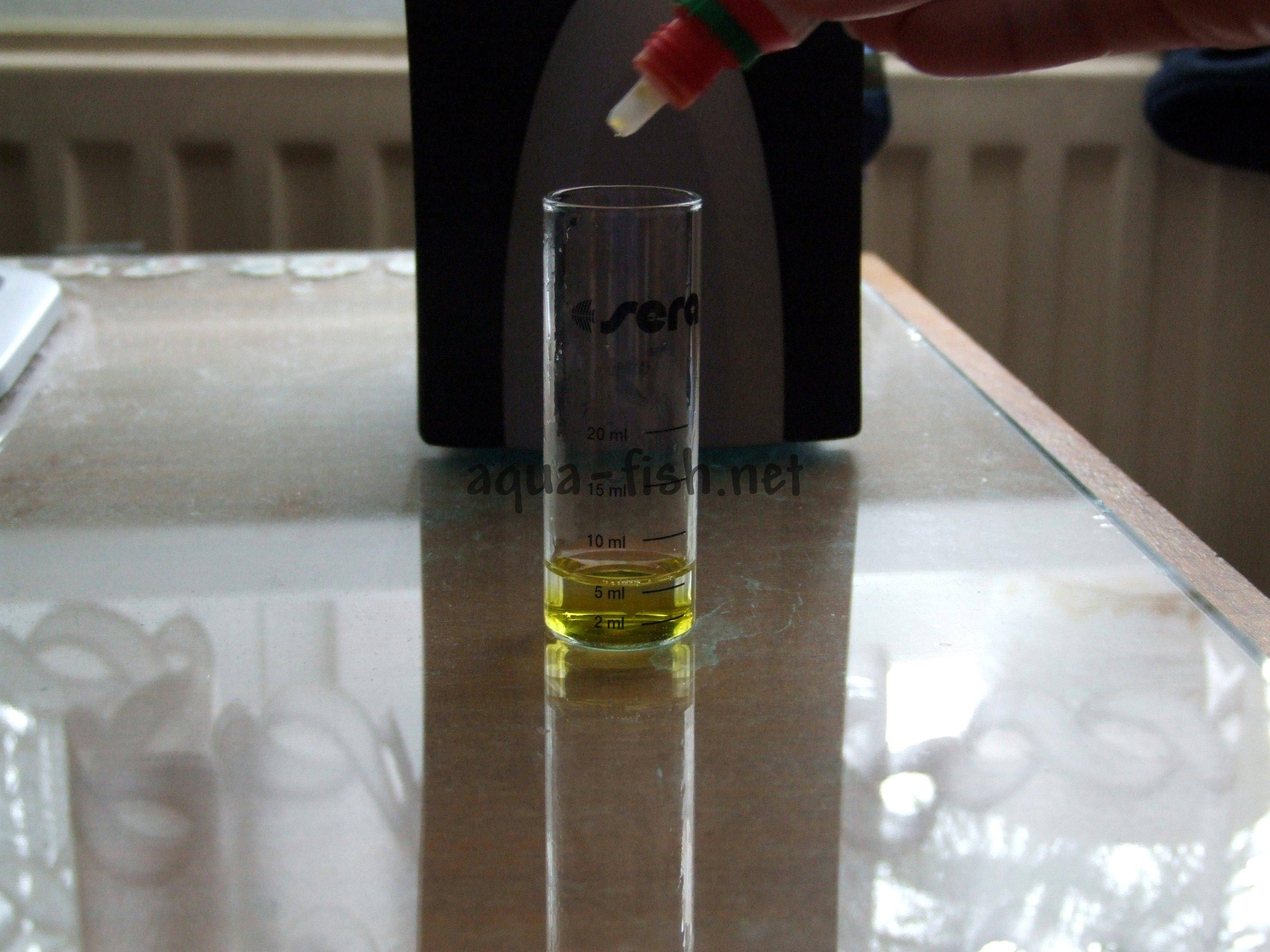
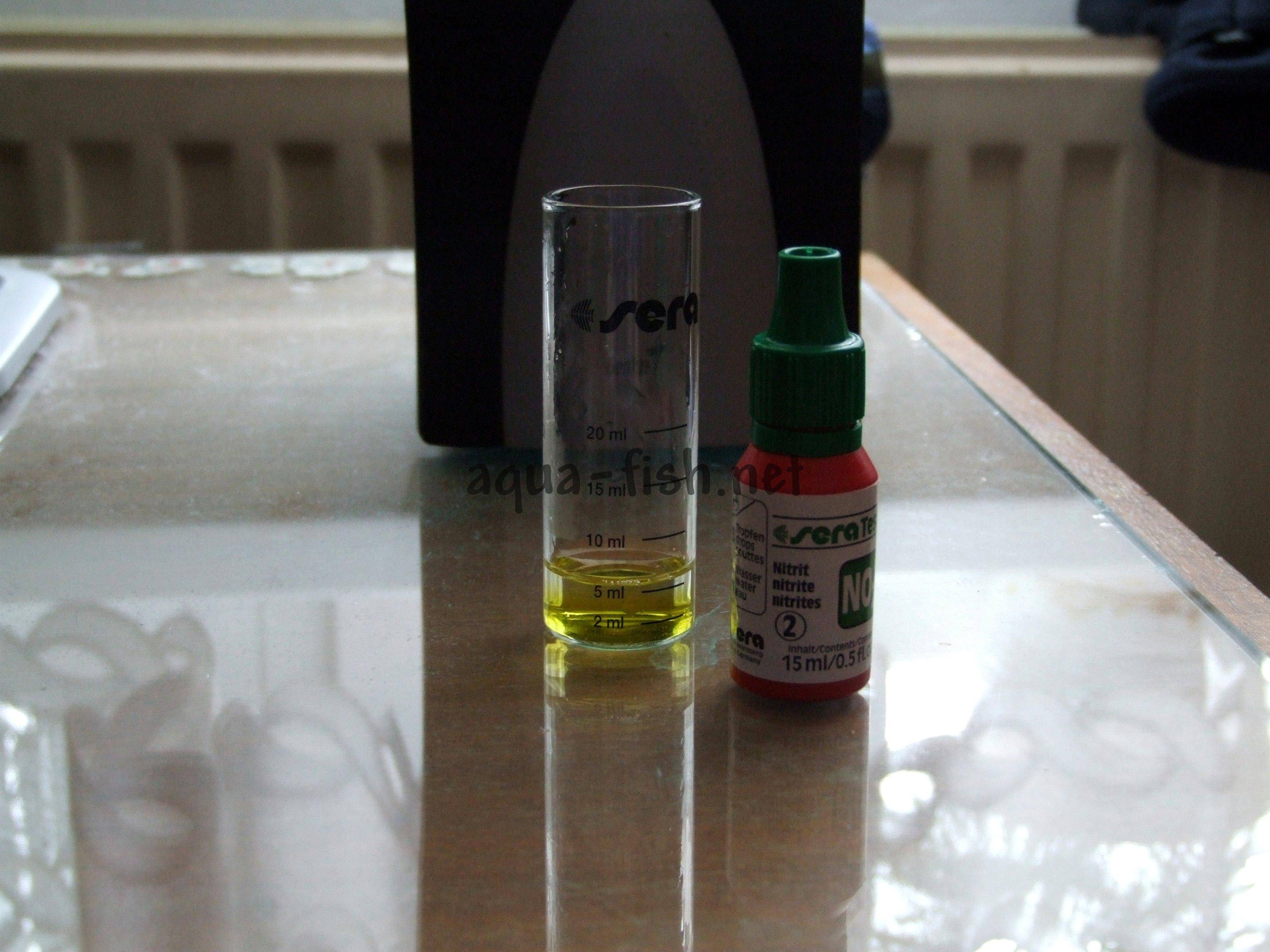
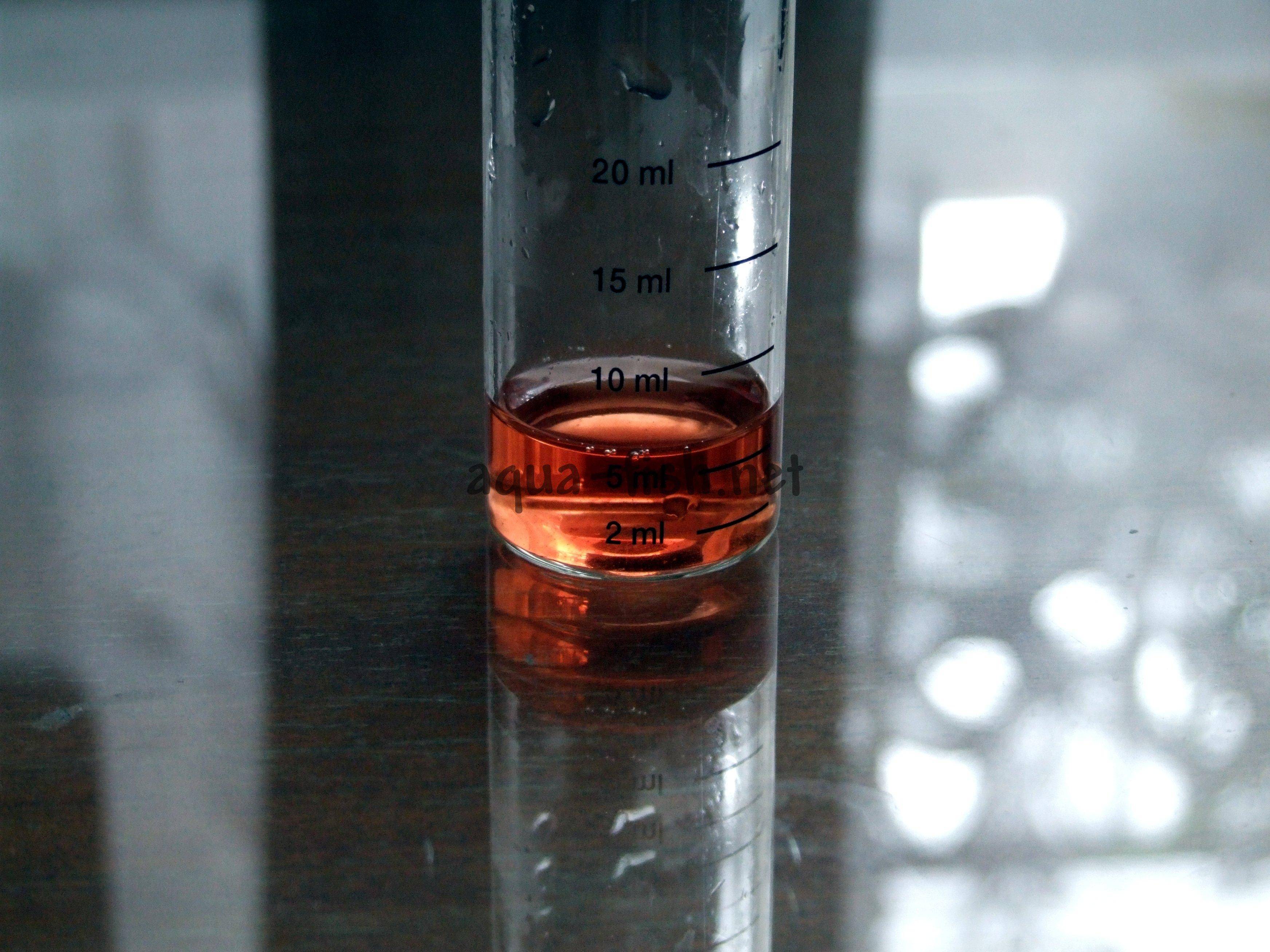
As you can see on the last picture, the water is not as poisonous as it was before (more red colour means more poisonous water).
Another useful article on the web
- pH and Ammonia at nippyfish.net!
Questions and answers
You're welcome to post own unique and not yet answered questions on this page! Use a form that can be found at the bottom of this page for this purpose, please. On March 23th 2011 we added the following Q&A here due to merging aqua-fish.net/answers with related pages, mostly articles. We keep collecting questions left by visitors of aqua-fish.net and answers are published in a timely manner.
-
What causes ammonia levels to rise in aquariums?
Answer: Rising ammonia levels are caused by the waste buildup due to overfeeding, plant and fish death or decay, and improper cycling. Ammonia can occur when the pH exceeds 7. You can reduce ammonia by reducing feedings, lowering the pH, making water changes, and increasing aeration.
-
How does ammonia get introduced to an aquarium?
Answer: Ammonia is produced by fish as byproduct of their waste. The more fish you have or the larger they are, the more ammonia that is created.
 The purpose of nitrification bacteria colonies in aquariums
 Chemistry of Aquarium Water with FAQ
 Controlling ammonia and related substances in aquariums
 Monitoring temperature in fish tanks, setting it and discussion
 Testing water in fish tanks for general and carbonate hardness and altering them
 An explanation of raising and lowering the pH level in the aquarium
 How to remove phosphates from a fish tank
 How to increase, reduce or just adjust pH in a fish tank with friendly forum