African Cichlids - Requirements, Species & FAQ
Expert Advice by Susan, keeping fish since 1996
Short introduction
This article is an introduction to raising African cichlids in fish tanks with links to several species that are classed as "African cichlids". We've also answered a couple of questions asked by visitors of aqua-fish.net in the questions & answers paragraph. We'd love to hear about your African cichlids too - use a form at the bottom of this page to share details of your tank, species that you keep and your experiences!
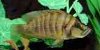
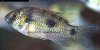
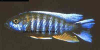
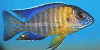
African cichlids are beautifully coloured freshwater aquarium fish. They have amazing social behaviour, display extroverted personalities, and are intelligent too. It is easy to care for cichlids, and they will bring a great deal of pleasure to the aquarium enthusiast if you take good care of them.
These fish are territorial and can be hostile towards other cichlids. Most often the largest cichlid is the dominant one and will behave aggressively towards other fish in aquarium - especially during breeding and spawning. The smallest cichlid is sometimes attacked and killed by the larger.
African Cichlids have aggressive behaviour so their tank should be as large as possible. A long tank is the best choice. In the aquarium should be a rock structure with caves and platforms, but with an open area for swimming. Light can be any colour you like. The water in African lakes is different from other bio-topes and looks more like marine than tropical fresh water. Because of their high pH and hardness levels it is necessary to treat the water with some sort of African Cichlid lake salts. Try to ask in your local pet shop.
African Cichlids breed like this: the female comes into the territory of a courting male and lays eggs. She immediately picks them up into her mouth and there they are fecundated. Her newborns stay in her mouth until it can no longer accommodate the growing fries. During this time the female usually does not eat. But a few clever cichlid females are released from maternal (paternal - father, maternal - mother) care by unusual coexistence with a fish 100 times bigger. The cichlid and catfish have their young in one place and they defend them collectively.
Their food should be rich in vegetation. African cichlids should be fed by supplements of peas, romaine lettuce, spinach, and zucchini which is cut into small pieces. You can also buy flakes and algae disks. African Cichlids, especially from Lake Malawi, also eat all available sources of food including phytoplankton, zooplankton, soft bottom deposits, algae on the surface of rocks, algae that grow upon other submerged plants, higher plants, molluscs, insects and benthic arthropods, fish scales, fish fins, fishes, and fish eggs, embryos, and larvae. Food especially made for the needs of cichlids is available in most pet stores.
List of species
Here are listed just some species. For advanced search visit this link, please.
- Altolamprologus compressiceps (Compressed cichlid)
- Anomalochromis thomasi (African butterfly cichlid)
- Aulonocara jacobfreibergi (Lake malawi butterfly cichlid)
- Aulonocara stuartgranti (Grants peacock cichlid)
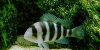
- Cyphotilapia frontosa (Frontosa cichlid)
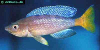
- Cyprichromis leptosoma (Slender cichlid)
- Haplochromis chilotes (Victoria biglip hap cichlid)
- Hemichromis bimaculatus (Jewel cichlid)
- Hemichromis lifalili (Lifalili cichlid)
Questions and answers
On March 23th 2011 the following questions and answers were added here due to merging aqua-fish.net/answers with related pages. You're welcome to submit own unique and not yet answered questions regarding African cichlids here! use a form at the bottom of this page, please.
-
At what age do African Cichlids breed?
Answer: This can vary between the different species as they will not breed until sexually mature. On average it can vary between the fish being 6 months old right up to 1 year old.
-
Why do cichlids die so easily?
Answer: Cichlids do not die easily; it is usually because the water quality is not of a high enough standard to keep them healthy. A well looked after cichlid can live for many years.
-
What can I do when 2 of my cichlids do not get along?
Answer: If 2 of your cichlids are too aggressive to each other, the only solution is to remove one of them for their own safety. Cichlids are naturally aggressive and we cannot change that.
-
Which African cichlids will not eat their fry?
Answer: Most African cichlids exhibit good parenting habits. They are very protective over their young ones. Most of them have parenting instincts are highly developed. Convict cichlids are among some of the best fish parents. They will defend their eggs and fry against fish that are 3 times their own size. The eggs and fry are hid in dense plants and substrate to prevent predators from eating them. Mouthbrooders keep their eggs and fry in their mouths until they are old enough to fend for themselves.
-
What can I feed my cichlids while I am on holiday?
Answer: Attach an automatic feeder to your tank and fill it with spirulina flake and cichlid pellets. It will dispense the food on a daily basis. The best way of ensuring that the fish are fed properly is to get a friend or relative to come and feed them.
-
Why does my cichlid have a yellow spot on its belly?
Answer: These are egg spots. It is a natural coloration on the fins as the fish mature, the spots get there name as they resemble the fish eggs.
 Discussion and guide on keping Blue dolphin cichlids in fish tanks
 An article and forum on keeping Jaguar cichlids, their breeding and feeding habits
 How to care for Red devil cichlids
 An article devoted to keepers of Frontosa cichlids with pictures and forum
 A guide on keeping and breeding Green terror cichlids
 How to care for Convict Cichlids with pictures and forum
 How to care for Jack Dempsey Cichlids properly
 Caring for the Jewel cichlid with pictures and discussion
 A guide on caring for and breeding cichlids from Lake Tanganyika
 Caring for Lamprologus species in fish tanks
 The Parrot Cichlid - Caring for, varieties and forums
 A page and forum dedicated to care of Peacock cichlids
 Setting up a tank for the Polypterus species
 Tank setup for Wolf cichlid, Feeding and Breeding
 An article and forums about raising Texas cichlids
 Basic foods for cichlids, with forum
 How to care for cichlids from the Lake Malawi (with discussions)